Tag: Wisconsin

  • Kenosha Women Weren’t Wallflowers

    Kenosha Women Weren’t Wallflowers

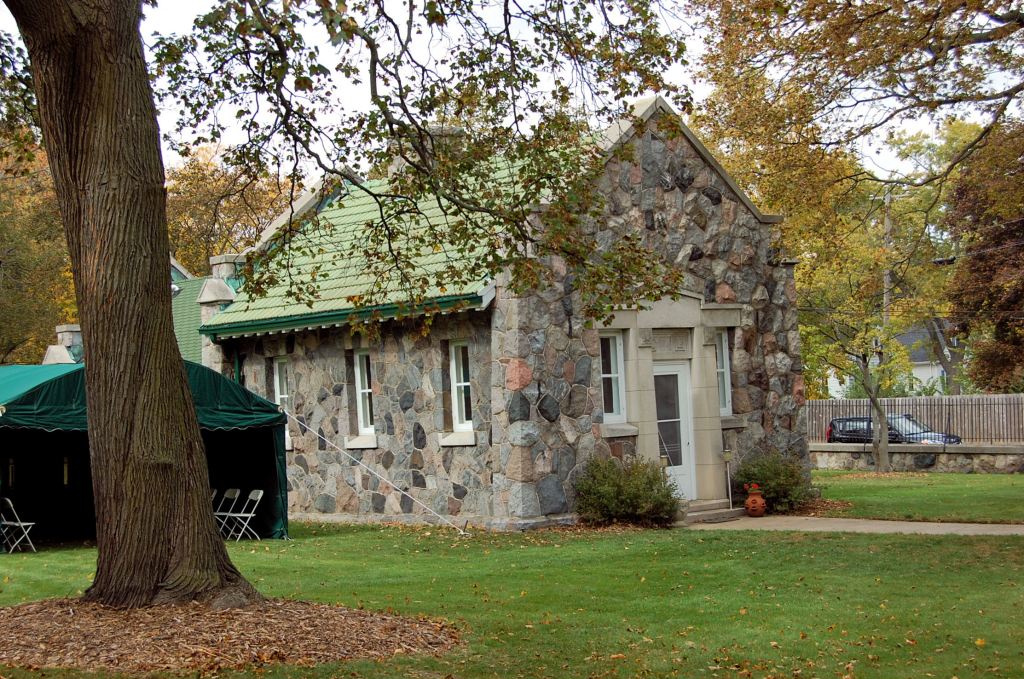
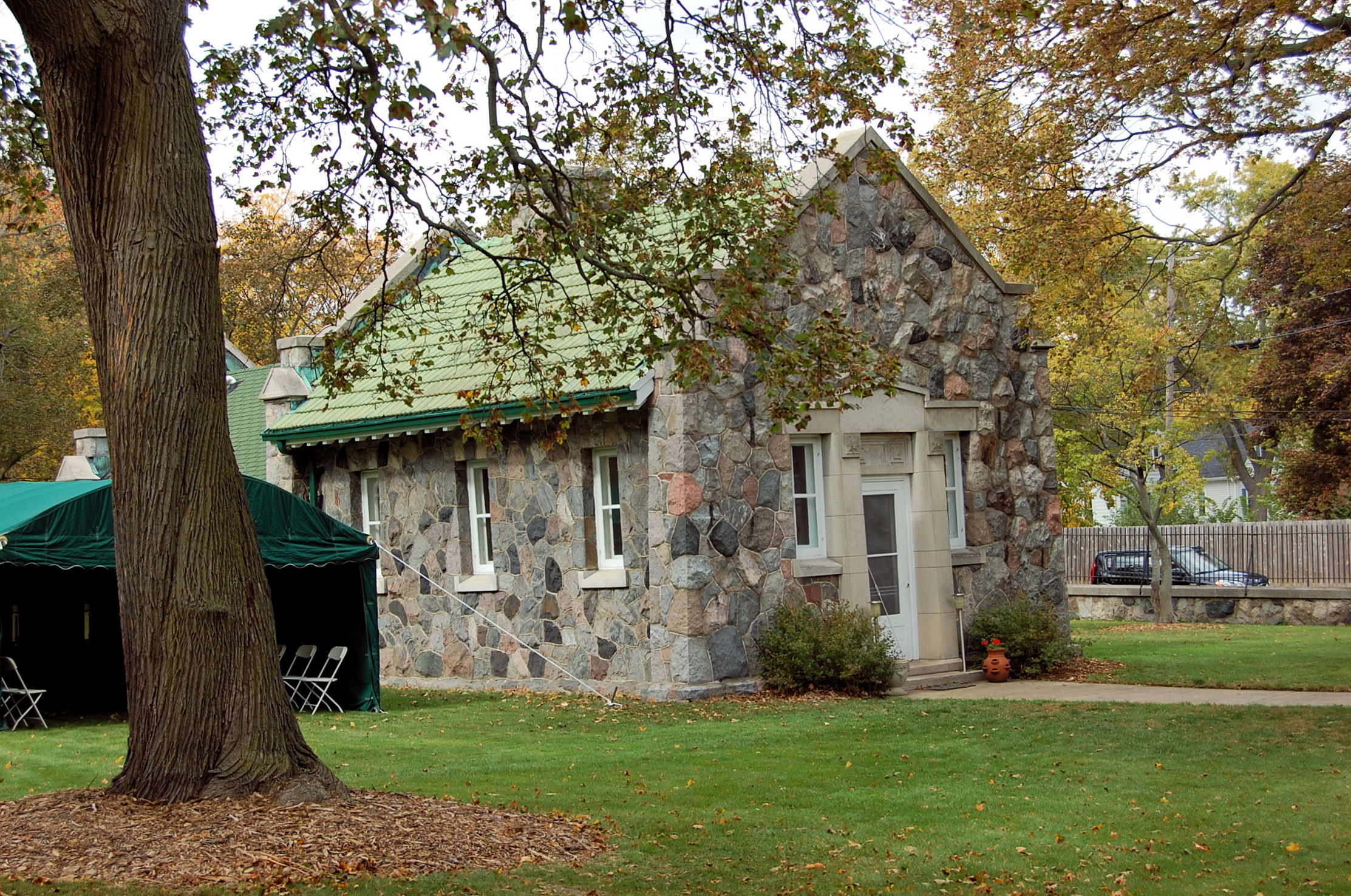
    Office of the Green Ridge Cemetery in Kenosha
    Office of the Green Ridge Cemetery in Kenosha. The tent was set up to be a wind free waiting room for the history walk tours.

    I want to thank my blog readers.  Because of you I’m learning more about the area in which I live.  Yes the feed the blog need has me going out to learn about my community.  Thank you for giving me the gentle push out the door and opening my world.

    One of our historic cemeteries here in Kenosha city is the Green Ridge Cemetery.  It is the oldest one holding graves of two and a memorial for one Revolutionary Soldiers. Every October there is a history walk in the cemetery given by the Kenosha History Center.  It’s different from the other cemetery history walks in that the guide doesn’t tell you the history but instead takes you designated graves where reenactors portray the person and tell you their life story.

    I’ve wanted to do this tour (which changes what historical figures it highlights  each year) for years.  It seems something always got in the way.  Last year I got there about 2pm and all the tickets were given out. Yes 350 tickets for the free tours were GONE!  There were crowds waiting for their tour time.
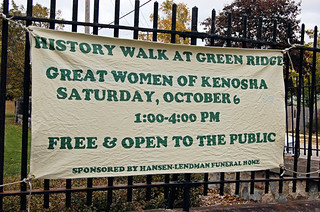
    History Walk At Green Ridge Cemetery - Great Women of Kenosha

    This year I made sure we got there EARLY!  We got tickets and were in the first tour.  It was the first fall day with a nip in the air.  Mike was freezing.  Still we enjoyed it very much as the sun was out and the colors (though dull this year compared to previous years) were out.

    History Walk At Green Ridge Cemetery - Great Women of Kenosha
    Naomi Waisman-Zabler portraying Dr. Helen Harbert

    Our first stop was Dr. Helen Harbert (1859-1930) portrayed by Naomi Waisman-Zabler.  Helen was born Hanson and immigrated to the US from Denmark.  She went to medical school and was one of the first licensed female doctors.  She lost her first husband and her children in a tragic house fire while she was at her practice.  Needing a new start she moved to Kenosha and started the first woman doctor’s practice here.  She met and married Hans Harbert.  During her life here in Kenosha she was a highly respected member of the community.  She served on the Kenosha County Medical Association, active with the Grad Army of the Republic Women’s Relief Corps taking care of Army Vets free of charge, active in the Danish Lodge, was a major Red Cross organizer in the county, and during WWI she actively promoted Liberty Bonds to support the troops.  However she became ill.  Her diagnosis was terminal and she knew how slow the death was with her aliment.  She’d tended patients with the same affliction (I don’t remember what it was but a type of cancer) and knew how they wasted away painfully.  After receiving confirmation of her diagnosis while in the Kenosha Hospital for testing she jumped out the window killing herself to avoid the wasting away.   She died at the age of 71.

    History Walk At Green Ridge Cemetery - Great Women of Kenosha
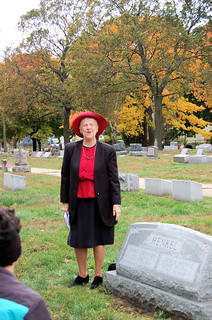
    Kathy Cole portraying Gertrude Alford

    Next was Kathy Cole who was portraying Gertrude Alford (1881-1964) at Mrs. Alford’s grave. Gertrude and her husband Walter moved to Kenosha from Detroit Michigan.  They became highly respected in Kenosha for their philanthropic generosity.  They sadly lost their only son when his car was hit by a train during a scavenger hunt.  He and his date were killed.  After that Gertrude turned her philanthropic tenancies toward helping young men and women.  After finding out about the Girls Scouts she founded one of the first troops in the nation here in Kenosha Wisconsin.  It is still active today and its original charter bears the signatures of Gertrude and Juliette Gordon Lowe (founder of the movement).  To support the new troop and the Boy Scouts Gertrude donated a large parcel of land for the scouts use.  Today it is Woodhaven Program Center and is still the hub of scouting  for the area today.  Gertrude was known for her love of golf.  She played well into her senior years and always had clubs in her car in case she could squeeze a few holes in between her appointments.
    History Walk At Green Ridge Cemetery - Great Women of Kenosha
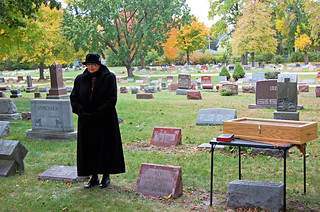
    Julie Burton portraying Jane Pfenning Henkel (my apologies to Ms. Burton she was a WONDERFUL and expressive reenactor! However all my shots seemed to catch her in unflattering expressions. My apologies Ms. Burton)

    The next woman on the tour  was Jane Pfenning Henkel (1914-2008) portrayed by Julie Burton.  Jane is the first native Kenoshian on the tour.  Her father was Mayor.  Her story intertwines with Gertrude Alford’s above.  You see Jane was the first girl Alford’s son had asked to the the scavenger hunt.  Jane excited to be asked by the posh Alford said YES!  Only there was one problem he wasn’t the first to ask her and she’d already said yes to another young man.  When her mother found out she made Jane tell Alford no she couldn’t go and stick to her word in accepting the first boy’s invitation.  If she’d gone with Alford she’d been in the car that struck by the train killing Alford, his date, and two more of their friends.  Jane lived a long happy life thanks to Mom’s intervention and making Jane hold to her word.
    History Walk At Green Ridge Cemetery - Great Women of Kenosha
    Jean Preston portraying Lauretta A. Dibble

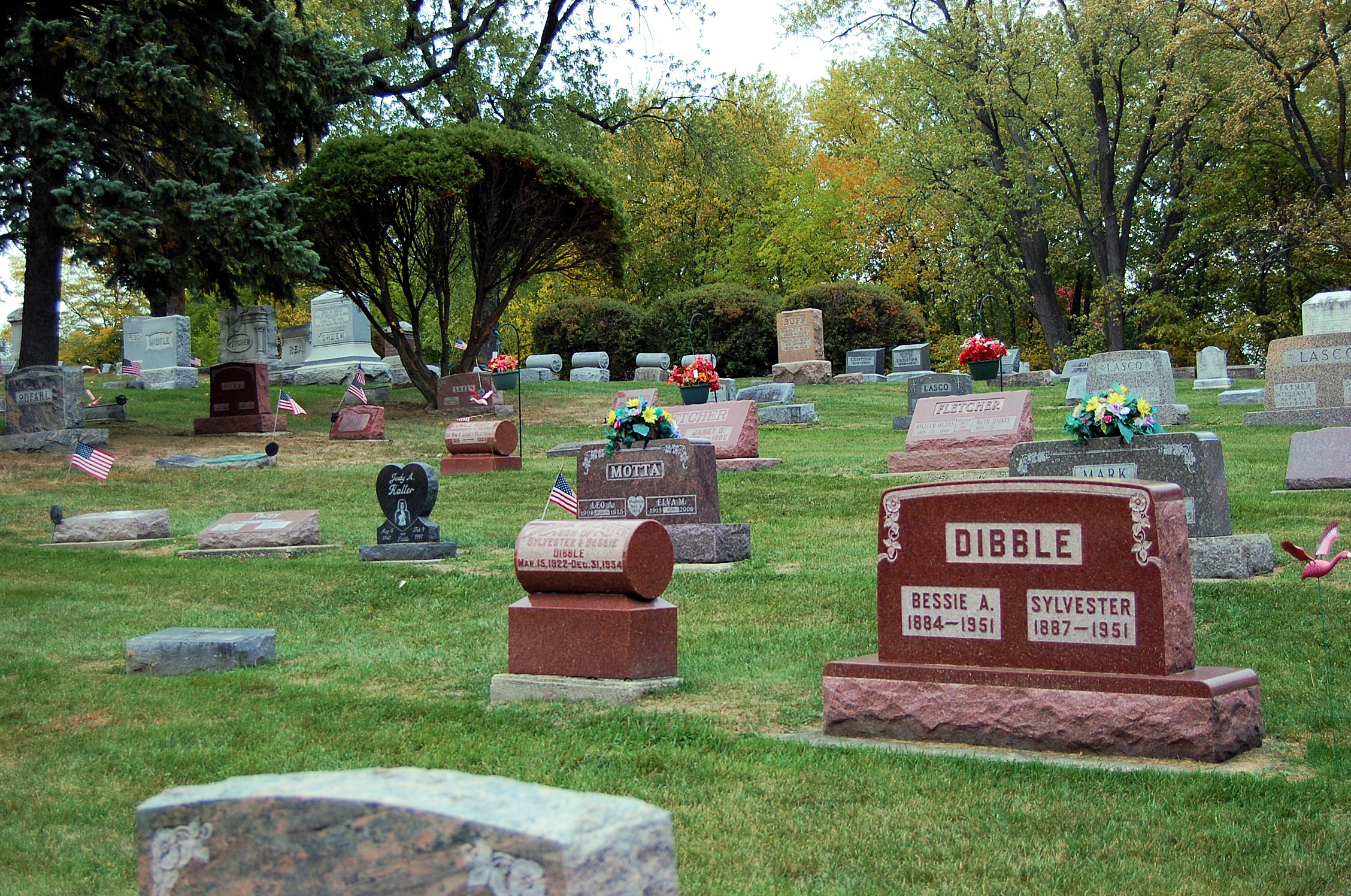
    We then moved on to the grave of Lauretta A. Dibble (1893-1952) portrayed by Jean Preston.  This was the second native Kenoshian.  She was born and died here but lived most of her life outside of Kenosha.  Lauretta was a missionary for the Congregational Church.  She spent years of her life teaching at a girls school in Africa.  She sent letters and journals home to her church here in Kenosha detailing her life in Africa.  The church here paid her salary and expenses to be at the school there.  She fell in love the people and culture learning many of the native crafts and cuisines   She sent back artwork and crafts to her church to show the beautiful work and to sell to raise money to support the school.  Unfortunately Lauretta developed cancer and had to come back to the United States for treatment.  She received letters regularly from the girls she taught and had taught.  These letters were dear to her and kept her spirits up while she was dying.  Lauretta died in 1952 here in Kenosha at her family home.

    History Walk At Green Ridge Cemetery - Great Women of Kenosha
    Viki Du Mez portraying the colorful Harriet H. Yule

    The final stop was at the memorial for Harriet H. Yule (1861-1932) portrayed by Viki Du Mez. This was the most colorful character of those portrayed.  She was the great aunt of Orson Welles (yes he was born here in Kenosha).  Her family was very prominent featuring the owner of the first Kenosha newspaper, mayors, attorneys, and owning Bain Wagon Works. However her family wasn’t free from controversy nor was her life.  Her sister (Orson’s grandmother) may have been a polygamist.  It seems her first husband wandered off never to return so sis married again.  That was shocking to the community.  She and her new husband tried to gain acceptance back into society by throwing lavish parties, of which Harriet and her husband George were very fond.  But seems the rest of Kenosha didn’t like the free wheeling done there nor the cover charge to gain entry.  Then Harriett herself became vice-president in the family business with her husband.  This was Bain Wagon Works.  It was not seemly for a young married woman of her stature to engage in business much less go down to the wagon works and sit in an office working.  She even *gasp* conducted business negations with other men not of the community!  She had a head for financial matters and George had a head for transportation design together they built a nationwide business in noted wagons.  However George died and their son took over the business.  Harriet retired and followed her inclinations, which was to enjoy life.  It was well known that she and her cronies like to party and would often go out in her chauffeured car to various bars around the area.  She would be seen coming home in evening garb when others were starting their day. Finally tiring of being the social pariah in a small mid-west town she decided to follow her niece and great nephew to Hollywood.  On moving day when the movers came to pack up her things they found her in a state of undress in her own bedroom enjoying a chilled mixed drink to start her day.  It is said none of the muscular young men that had come to move her accepted her invitation to join her in a drink!
    History Walk At Green Ridge Cemetery - Great Women of Kenosha
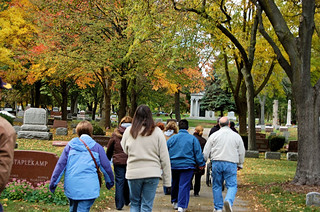
    A tour heading off to the next reenactor.

    I was left wanting more stories from more women of the past.  Sadly this year’s historic walk had come to a close.  I made some pictures of unique monuments and vowed to come back before next year just to photograph the other unique ones I saw in the distance.  Oh and I also vowed that next year we’d get there early again to be sure to meet more people from Kenosha’s past.

    As always there are more photos of the day over at my Flickr account.  You can get there by clicking any image in the article (not the title image) then look around.  Also if you’d like to see an image larger, any image including the title image, then click on it! Until next time!
  • Even not on Halloween Trick or Treating is FUN!

    Even not on Halloween Trick or Treating is FUN!

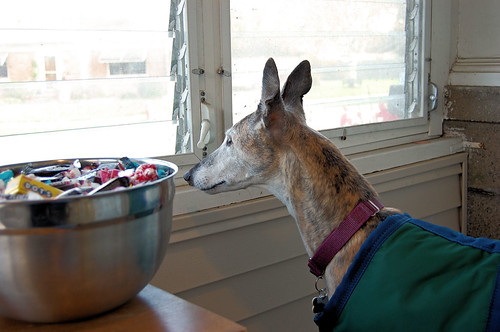
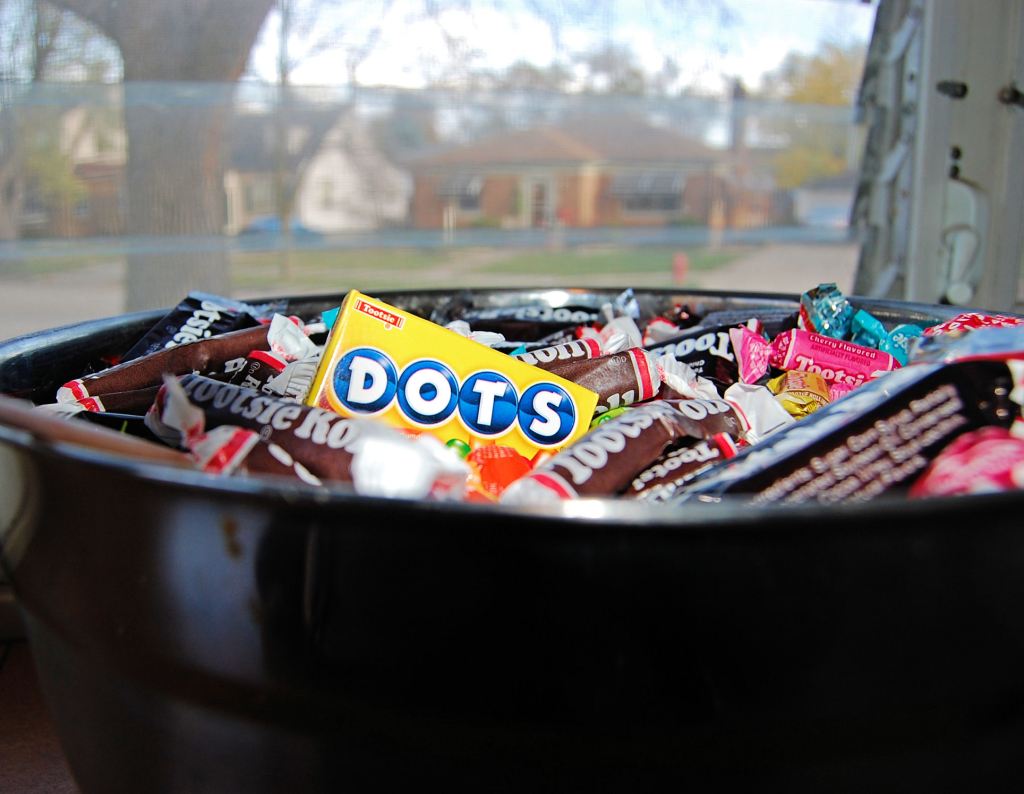
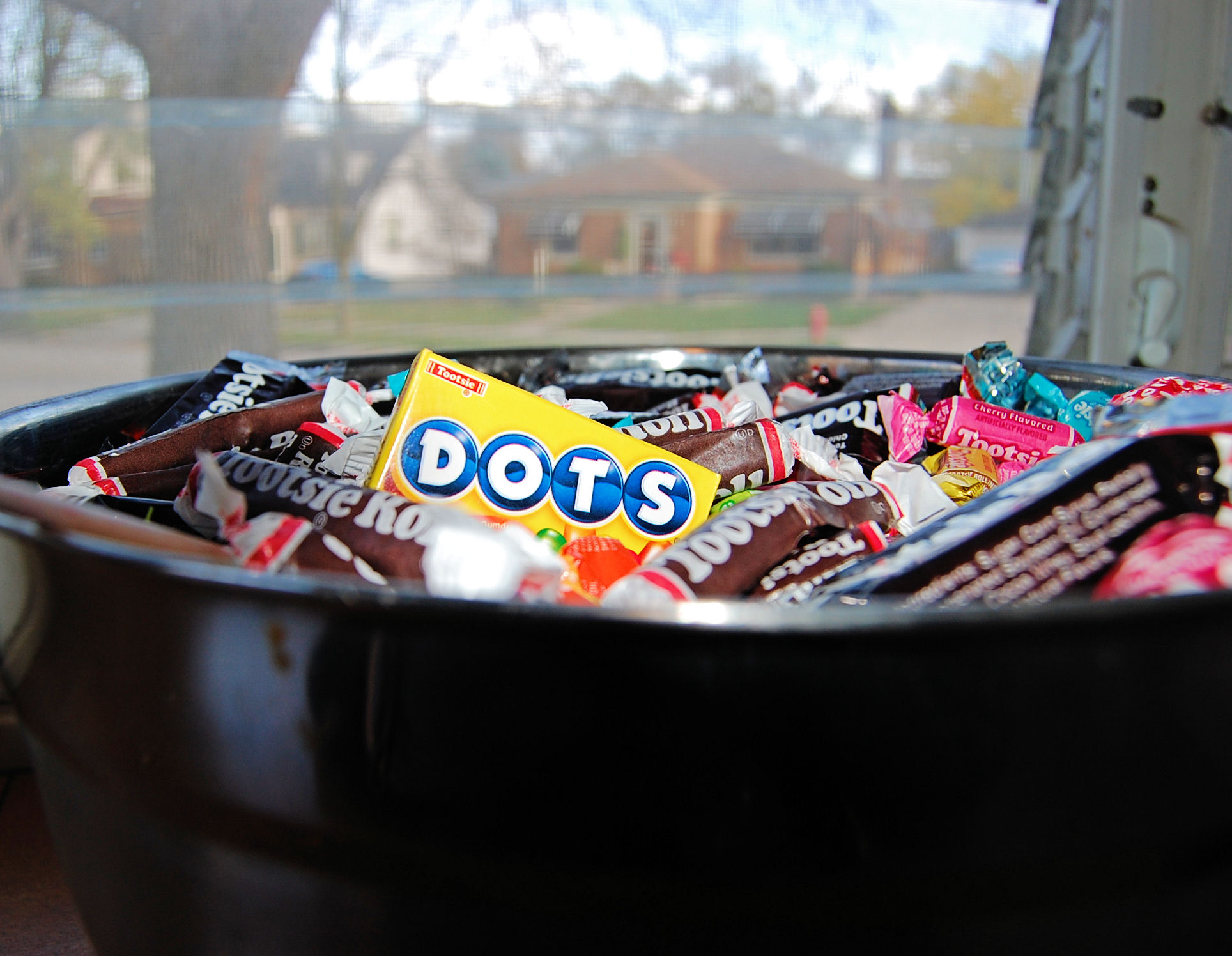
    Candy bowl awaiting trick or treaters

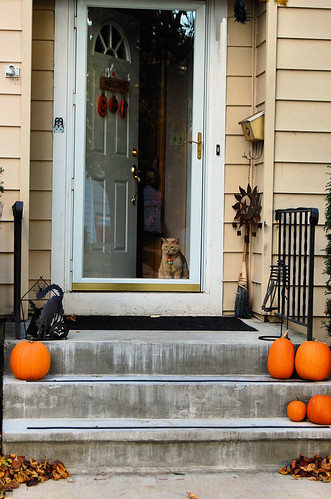
    This is the first community I’ve ever lived in that schedules trick or treating not on the day.  It’s the Sunday before (unless it falls on a Saturday) 3pm – 6pm.  That means last Sunday was our Trick or Treat day.  Never mind Halloween wasn’t until Wednesday.  Unfortunately I’d say in our neighborhood only 10% of the homes participate.  Many of those who do go all out!  We hand out candy and enjoy seeing the ghosties and ghoulies coming to the door.  Rappy loves it and Mr. Blue supervises as alpha black cat of the season.

    I tend to set on the stoop to hand out candy so the animals can watch from the screened in front porch without rushing the kids at the door when I open it.  One little girl looked up at the regal Blue sitting there fluffed against the cold watching the proceedings with half open bright green eyes.  She asked “Are you a witch having a black cat like that?”  I smiled and whispered “Yes, but not all witches are bad.  I’m a good one and I have TWO black cats.”  Her eyes got wide and she smiled, “Really?!?”  “Oh yes.”  The smile got broader “Oh WOW!”  She took her candy and went off excited.  I can’t wait for the children’s rumors about me to begin!  I don’t know why she didn’t ask if I was into gambling since I have a greyhound but guess she’s not old enough to know about that yet.

    As far as costumed kids?  We get LOTS there are A LOT of kids in the neighborhood being situated within walking distance to four elementary and two middle schools.  We started with 15 and half pounds of candy and ended up with less than a quarter pound left.  One thing I enjoy is families dress-up and go out together.  Often times even the dog is in costume.  It’s fun to see.

    Enjoy a look at Trick or Treating in my neighborhood.

    Trick or Treating in My Neighborhood
    Rappy anxiously awaits more visitors.
    Trick or Treating in My Neighborhood
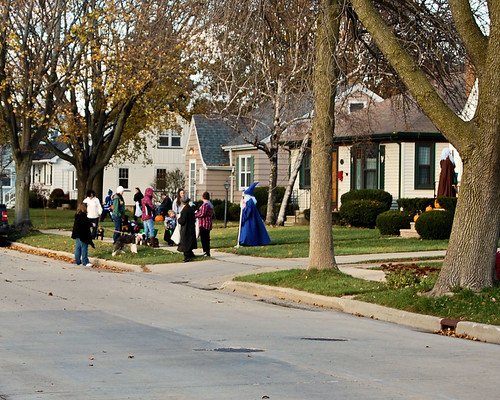
    Family group trick or treating. Wizard dad was so COOL!
    Trick or Treating in My Neighborhood
    Mario drove his Princess from house to house.
    Trick or Treating in My Neighborhood
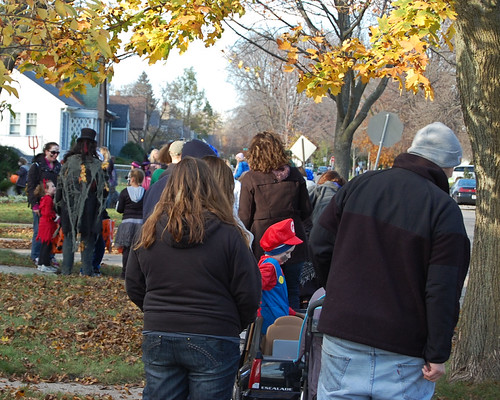
    Two family groups wait their turn at one of my participating neighbors.
    Trick or Treating in My Neighborhood
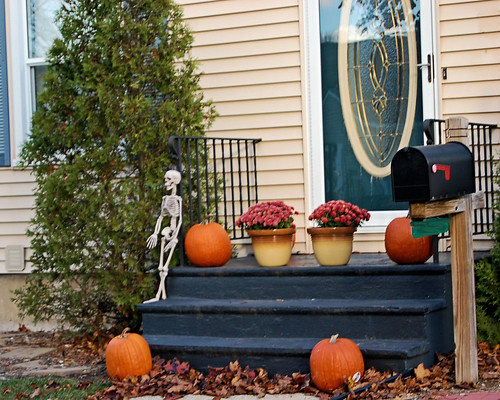
    Clear way to say I AM NOT participating – to which I have to wonder – why decorate?
    Trick or Treating in My Neighborhood
    Yes this actually works in my neighborhood. This was take about 5pm consider it had been out since 3pm and that’s what is left.
    Trick or Treating in My Neighborhood
    See I told you some REALLY participate!
    Trick or Treating in My Neighborhood
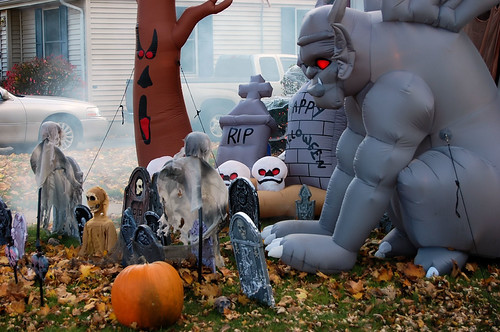
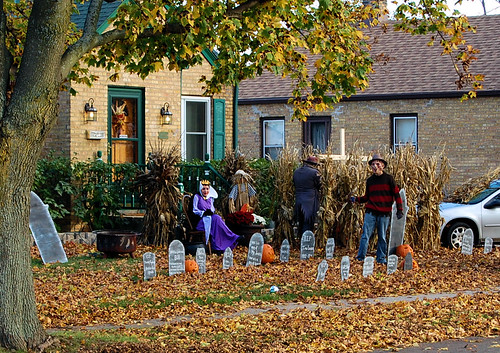
    Here the Evil Witch sits on her throne in her graveyard handing out candy. Her husband Freddy Kruger keeps the corn maze.
    Trick or Treating in My Neighborhood
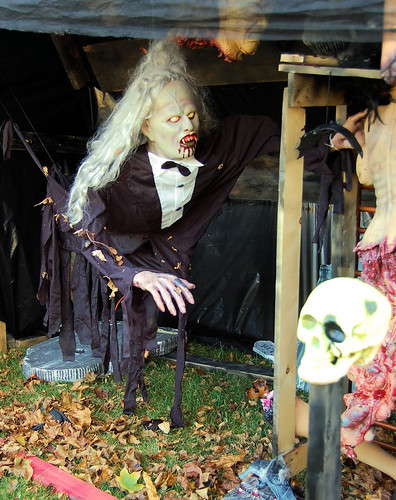
    More yard decorations, this is animated at night
    Trick or Treating in My Neighborhood
    Not all decorations are ghoulish and pumpkins…
    Trick or Treating in my neighborhood
    I was not the only one supervised by the feline overlords.
    Trick or Treating in My Neighborhood
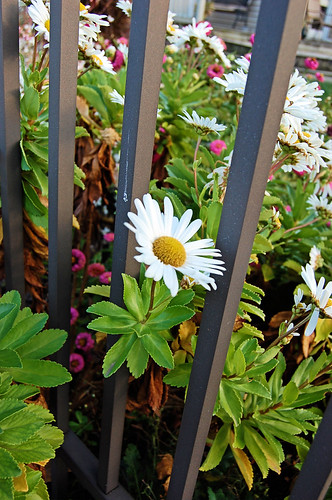
    The final daisies of fall
  • Wisconsin and Beer Go Together Like Mac and Cheese

    Wisconsin and Beer Go Together Like Mac and Cheese

    The building is now an office complexTwo years ago in October I took a historic bus tour of Milwaukee.  It was sponsored by a local museum and let me say I was the youngest there by FAR.  Any way it served the purpose of giving me a base knowledge about Milwaukee.  I enjoyed the tour and now have some things on my bucket list from the tour.  I know it’s been two years but with blog food ever needing to be made I’ve motivation to do them now.

    Pabst brewery (6) time machine 2
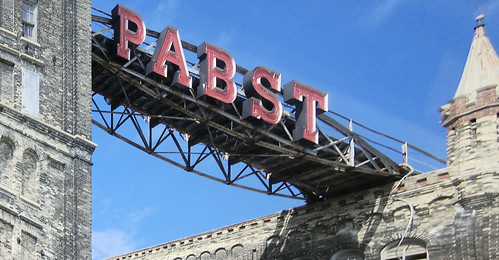
    This is a shot I made of the abandoned Pabst Brewery in Milwaukee I played with treatments to make it look older.

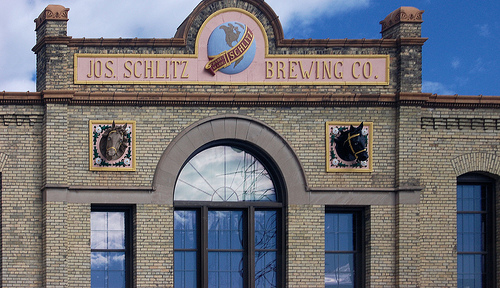
    It was on this tour I learned more about the beer and Wisconsin connection.  Not that it is a surprise to me or any one, but the area was settled by people of Germanic heritage. As Octoberfest recently proved yet again – Germans love beer.  When they got settled one of the the businesses they quickly established was breweries.  Many of these are still nationally known today even if some are now defunct as brewers.    Two of those are Schlitz and Pabst who now exist as virtual brewers.  Meaning that they don’t actually have a brewery any more they contract another brewer to brew and put their label on it.  Schlitz old brewery in Milwaukee is now a complex of offices.  True one as seen above still has the horses heads and logo of the stable maintained in lovely condition.  The Pabst facilities remain vacant however.  Miller is now huge, no longer American owned (only national brewer that is American owned is Sam Adams) but chugging along as a conglomerate and brewery.

    Pabst Bar
    Pabst Bar Racine Wisonsin

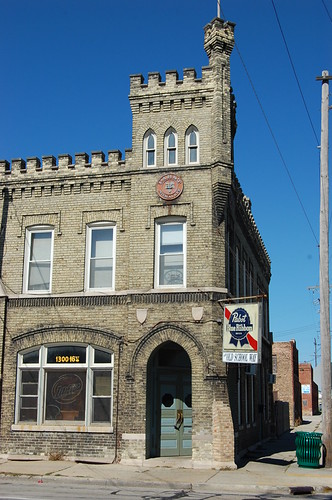
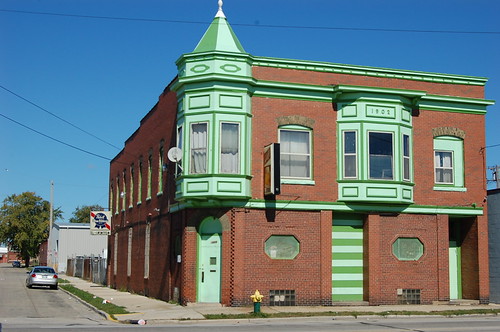
    Back in the day bars in Milwaukee and surrounding areas down to Chicago were owned by the breweries.  So if you wanted say a PBR you went to the Pabst bar, a Malt Liquor Bull the Schlitz bar, to live the High Life the Miller bar and so on.   Many of these bars of the late 1800s and early 1900s were built with distinct design to make them easy to recognize by their patrons.   Two of those designs survive in Racine a Pabst one just across from a Schlitz one.  On one of our drives out in the Mustang we stopped by them so I could get their pictures.

    The Pabst one is my favorite.  It looks just like a castle.  Currently it has beer signs in the in the windows including a Miller Lite one in the big front window (sacrilege) .  However there were no indications it was an operating business.  There were no hours on the door nothing.  Still the building is well maintained.  That’s more than can be said for the original Pabst brewery right now.

    Schlitz Bar
    Schlitz Bar Racine Wisconsin

    The Schlitz one is just across the street.  It’s distinctive but right next to the castle Pabst it does pale in comparison for uniqueness. Best I could tell by looking around it and walking the side walk is that it is now apartments.  The Schlitz sign is not original but is nice to be there to still commemorate the original purpose of the building. As for the green it’s not my taste but I won’t go as far as to say it wasn’t original.  Many of the paint schemes used then were very colorful and not combinations we’d choose today or even call tasteful today.

    That’s just a view to the long roots beer has around here.  I’ve added a few shots from the Milwaukee tour that were beer related to finish out this post.  As always if you want to see more photos of the buildings or from the tour click on the images and surf my Flickr account – Until next time!
    Pabst brewery (8) time machine

    Pabst brewery


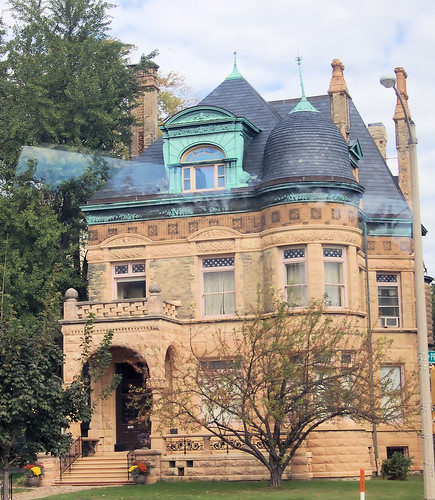
    Pabst Mansion
    This is the mansion that Pabst built. It is open for tours periodically. I will go on one some day.
  • Liberty Cemetery in Salem, Wisconsin

    Liberty Cemetery in Salem, Wisconsin

    Salem Wisconsin

    Mike has been helping me keep an eye out for photo opportunities locally. He knows I must feed the blog pictures and subject matter daily Monday through Friday. One thing he cut out of the paper and pinned to the fridge was a series of history walks in Salem, Wisconsin. Perfect for me!
    The only problem was it started at 5pm each day and Mike gets off work at 5pm. These feed the blog things are stuff we do together. With effort on his part we made it to the final one – the history walk in Liberty Cemetery.

    Salem is a small town just west of Kenosha City (where I live) but still in Kenosha county. It’s getting out in farm land territory back in the days when Kenosha was founded and much of it is still villages and farms to this day.

    We had missed the previous three nights history walks. So we didn’t know the full stories of some of the people the tour guide pointed out. Also we aren’t from the area so names of prominent families meant nothing to us. Nor did her explaining that Mr. So and Sos farm from the early 1900s took was is now the Jones, Smith, and Brown farms today. Still we did learn a few things and I’ll share those with you.

    Liberty Cemetery Salem, WI

    Mike and I knew that Kenosha was originally called Southport. It was founded by a group from Utica New York who decided they needed a port on Lake Michigan. That’s all we knew. We’d pondered why a group in Utica thought they needed to send families here to make a port. We’d lived in Ballston Spa and I’d worked in Schenectady New York. So we knew where Utica was and that it didn’t even have a port on Ontario the closest Great Lake. What possessed them to think they needed to start one all the way over here on Lake Michigan?

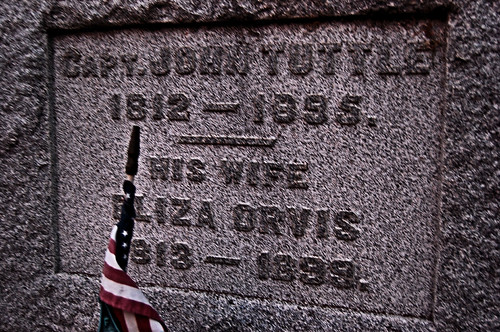
    Capt Tuttle’s story held our answer. It appears in the mid 1800s in Utica they still followed the tradition of the first son inherits the full farm. The second and later sons were just out of luck. So Utica wanted to offer an outlet to these non-inheriting sons and their families. This was the beginning of the lumber boom here in Wisconsin. The thought was to form a company to send these families west to settled there and send first wood then later produce to fuel the growth in the eastern seaboard. Forward thinking really, as the small New England farms were going and the big cities of New York, Boston, and Philadelphia were booming.

    Liberty Cemetery Salem, WI

    Utica formed a company for this venture along the lines of the West Indies Company that helped expand into the Carribean but this was to expand to the western shore of Lake Michigan. That’s where Capt. Tuttle comes in, he was hired as part of this company. He owned a large sailing vessel and was the mode of transportation from an Lake Ontario port to the new Southport on the west side of Lake Michigan. Passengers purchased fare to transport them to Southport, put them up there for a few weeks then they were to go west and claim land. Capt Tuttle retired to Kenosha (then Southport) a very wealthy man and knew most of the families in the area as he’d helped them settle there.

    Liberty Cemetery Salem, WI

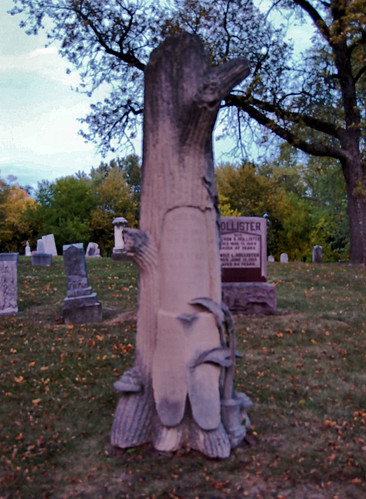
    You notice these tree style markers in many cemeteries around here. I always wondered was it a fad at the turn of the century in this area? Did it mark say founders who cleared the land for farming? What was the significance of such a marker. It was for members of the Modern Woodman Fraternal Order. Their footings even were made to look like logs. Sorry these photos are off but night was falling and I had to really adjust to get enough light for the image. Apparently I didn’t hold still enough.

    Liberty Cemetery Salem, WI

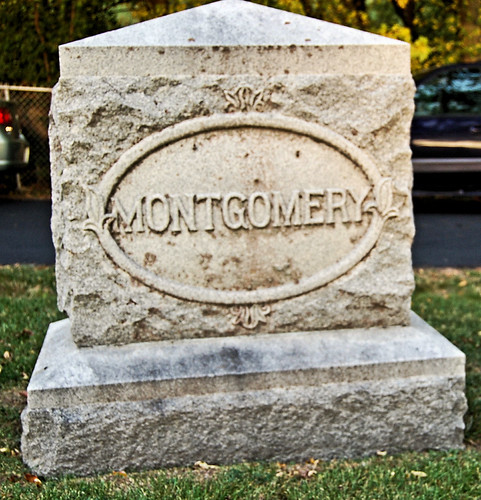
    The Montgomery family claim to fame was a connection to Mary Todd Lincoln. One of the Montgomery women was a private nurse to Mrs. Lincoln for a time. I found that interesting and wish I’d gotten the name of the woman who was the nurse. Maybe next time I’ll catch that.

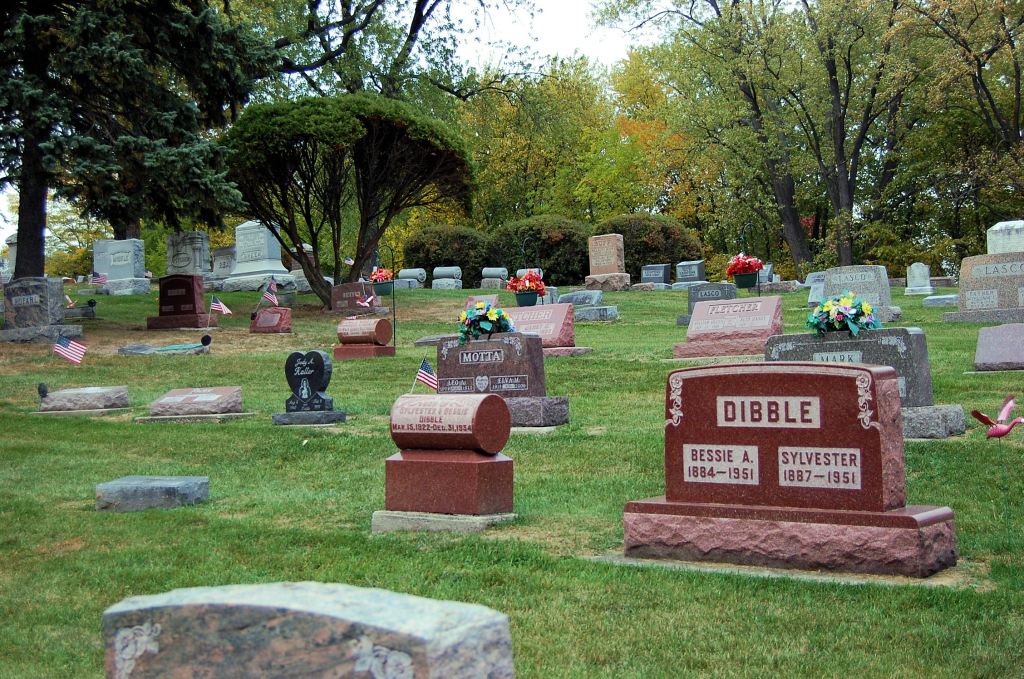
    I found this next marker interesting. See the stone there behind the flamingo. Those flamingo markers were used by the tour guide to mark the graves she was talking about. She stopped to tell us about this stone.

    Liberty Cemetery Salem, WI

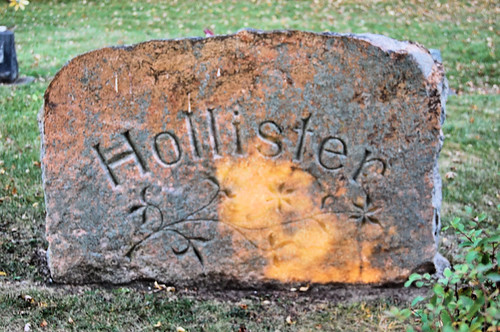
    It’s a natural stone from the Hollister family farm. They were the only family to haul a natural stone from their farm to mark their family plot. Here’s a picture of the other side.

    Liberty Cemetery Salem, WI

    As you can see it is carved. I know it is simple but I think it is lovely. I actually like it better than some of the fancy ornate markers of other family plots. This one came from their home and is elegant in the simplicity of it.

    Liberty Cemetery Salem, WI

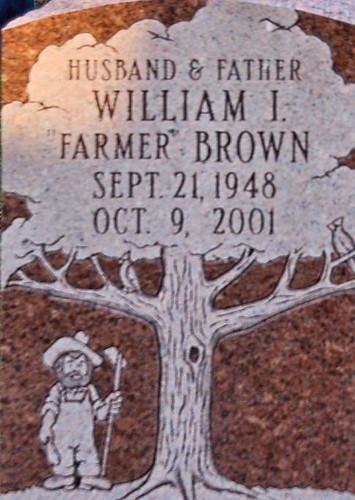
    I liked this stone. Farmer Brown’s is a large produce farm in the area. Right now it’s their big cabbage and pumpkin season. Once when I was at my parents I noticed the pumpkins for sale in their local store had come from Farmer Brown’s in Kenosha Wisconsin. This marker did something a tombstone rarely does – it made me smile. I thought of happy farmer with happy produce. I thought of Aaron as a baby when I’d read the children’s book Farmer Brown. “The cows are hungry but where is…” and he’d shout at the top of his lungs “FARMER BROWN!” I liked it even though I didn’t know the man or his family. I instantly had warm feelings for them. However, the tour guide did say some Brown family members think it is too cartoony and want it changed to something more respectable. To me what’s more respectable than being remembered with a smile and good thoughts?

    That’s our little tour of the small “old” cemetery in Kenosha. I put old in quotation markers because to me this is such a new area. I mean Wisconsin was only made a state in 1848. So the “old” grave here were after that. I was raised in a church that was over 200 years old. I lived in Charleston South Carolina where the OLD homes were built in the late 1600s. My grandfather was born in 1899 so I can name my line back to 1848 from memory! This is a young place still establishing itself. Still I loved learning about the area, seeing the history and hearing the tales of those who lived here before me. Except unlike them I intend to die somewhere warm preferably on a beach with pineapple dink in my hand watching a hunky pool boy.

  • The Glimmer of Glass

    The Glimmer of Glass

    Griffins & Shield window in Ambrose Hall
    The Griffin was the mascot of the school. You’ll see it used often in the design of the windows. This window was in Ambrose Hall and was given by the class of 1907.

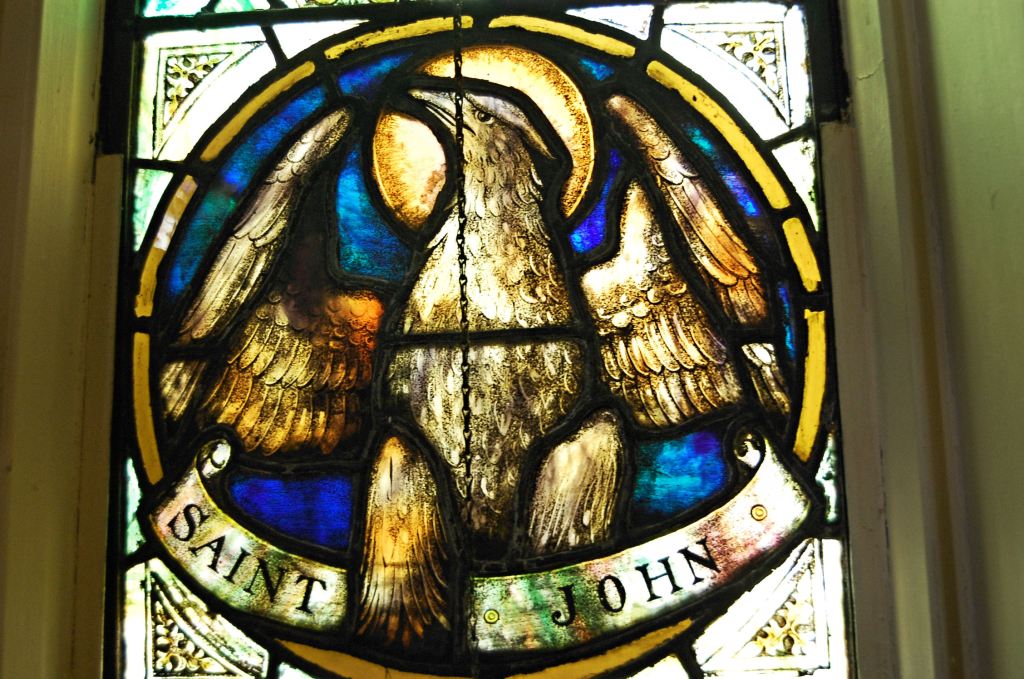
    Oh, I do adore stained glass windows.  I think that’s partly why I long to work with the Czech glass beads of various types.  I like the gem like quality and wide diversity glass offers.  On our first visit to the Kemper Center was to tour the Durkee Mansion  the stained glass windows caught my eye then.  On our recent tour of the Kemper Center proper  I got to see them through out the center.  It was a tradition from the earliest classes to design, commission, and donate a window with the class motto to the center upon graduation.  Some windows in the campus chapel were donated as memorial or honors for individuals by families or groups.

    The earliest windows were made in Germany.  I can’t imagine they were cheap to have made there and shipped here.  I’m sure the project took all senior year if not started in their junior year.  Later windows were made in England such as the Angel and Mary one.  Still not cheap I’d bet.  Then later ones than that were made here in the US.  I’m sure it was a be thing to have your class window come in and be installed.

    We were lucky when we toured the center that it was very bright day.  The sunlight through these windows was amazing.  I can’t say the images did it justice but it gives you a good idea of how lovely these works of art are.

    (more…)

  • An Advanced School for Girls

    An Advanced School for Girls

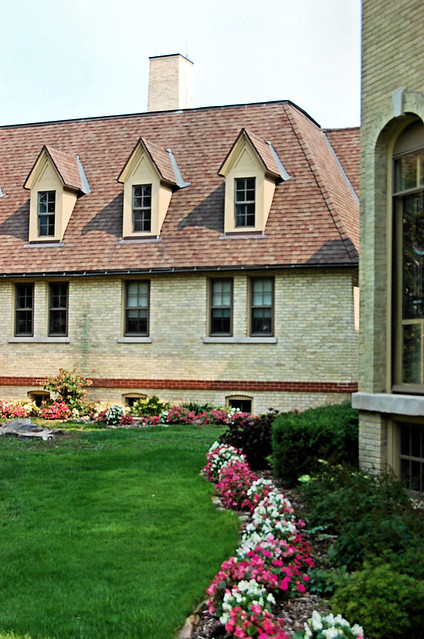
    Chalk brick building with begonia in white and pink trimming a manicured green lawn.

    Kemper Center is  an important landmark here in Kenosha.  It was added to the National Register of Historic Places in 1976  for historic significance in architecture (Italianate/Gothic), Education (girls school 1865-1975), and religion (Episcopal Sisters of St. Mary Western Provence).  It is named for Bishop Jackson Kemper, the First Missionary Bishop for the Northwest Territory of the American Episcopal Church.  It’s Register number #76000067.  The last time I did a post about it was highlight the Durkee Mansion during the holidays. Today highlights the school itself.

    It’s not often open for tours.  Mike and I were determined to see the center when we read in the paper it was to be completely open for tours on that Sunday.  From the nun’s lodging through the chapel to class areas including the first women’s chemistry lab and the Griffin observatory then out through the Simmons Gym. Sounded great and we were looking forward to seeing the interior.

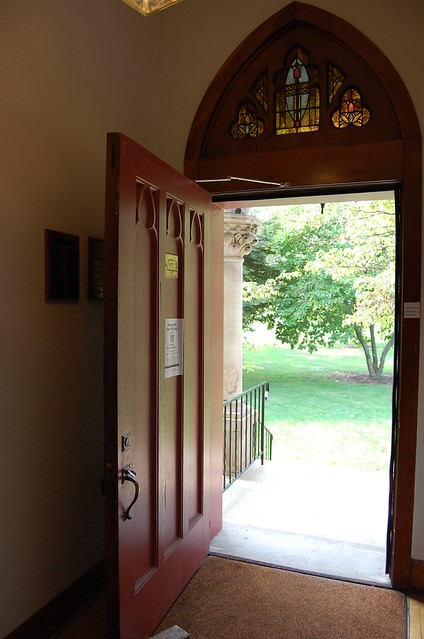
    A red door stands open to the well manicured lawn. Above the door is a stained glass window.

    The campus of the school grew of the years.  We started in Ambrose Hall which was home to 36 nuns and was built in 1911.  It even had a red door – yes I made a picture of it! It is named for Sister Mary Ambrose who was Mother Superior and headmistress at Kemper for nearly 40 years.  This hall featured the dining room for the nuns where they took their meals in silence but had a wonderful view of the lake.  Upstairs were the quarters for all the nuns except the Mother Superior who resided in the Durkee mansion.  There is a private chapel upstairs for the nuns.  This area was off limits to students and men it was the nuns area.

    There were many beautiful stain glass windows here as there were in the Durkee manison.  It was tradition that each graduating class design and donate a glass window to the school.  I’m going to give them their own post since the were so colorful on the sunny day of our tour.  Just know they are beautiful.

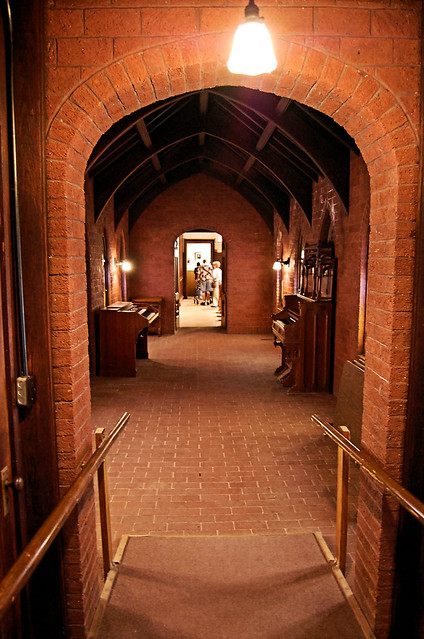
    Next the tour moved into the Red Brick Cloister built in 1911 connecting Ambrose Hall to the campus Chapel.  This was the final area of the sister’s retreat.  It is made of dark wood and red brick with Gothic arch ceiling.  Both sides are lined with beautiful stain glass windows each window offering a different stylization of the lily.  The Order of the Sisters symbol was the lily.  The area was very peaceful and calming.

    View from Ambrose Hall through the Red Cloister to the Campus Chapel

    From there we moved into the brightness of the campus Chapel built in 1875.  Like many structures it’s been expanded and elaborated upon since it was built.  In 1904 the marble Baptistery was added.  That features stain glass windows of the archangels.   The iron gates to the Baptistery and the Baptismal font were gifts from the Morrell family in gratitude of their daughter surviving the Chicago Iroquois Theater fire.  The rood screen separated the sitting area of the sisters from that of the students. It was designed by Anna Upjohn a student and was built in 1889.  The altar and pews were hand carved in the Germany.  The triptych over the altar features the main painting is a copy of The Mystical Marriage of St. Catherine by Fra Bartolommes.  The two side panels were painted by Anna Upjohn the same student that designed the rood screen.   There were numerous stained glass windows given as memorials, honorariums, and class graduations. 

    From there we entered the school proper. The intention of the school was to teach the girls to have spiritual, intellectual, and physical force to become leaders in society.  Roy Roger’s daughters attended here as did Basil Rathbone’s as did the future  Mrs. Alan Ladd.  Ms. Frances E. Willis the first woman ambassador was a member of the 1916 graduating class.  Today there are about 2,000 living alumnae living in all 50 states and 8 foreign countries.

    Alter with three paintings

    Through this connecting hall to the larger part of the school we passed the Bridal room.  A lovely room for brides to dress in their gowns and prepare for their wedding.  Also there were various displays about dorm rooms, class rooms, preparation of the chapel for services, and such.  Oh and yes still gorgeous stain glass windows continued throughout.

    Then we entered the dining hall.  We’d been here before for A Casino Night fund raiser for the care of the hall and observatory. There was a lady that had worked in the kitchen.  She told us stories about the girls, nuns, and priests.  Seemed many of the girls were children of families that traveled for work.  She remembered daughters of circus performers, diplomats, military families, and such.  She said she thought they started awfully young, at 5th grade.  Hard to be away from your family at that age.  School was year round not September – June as it is today.  They always sang a Latin prayer before meals and two sisters roamed the dining room watching for proper use of utensils and table manners.

    Dorm Room and Uniform display

    Next for us was the chemistry lab that was built in 1894.  It was modeled after a new one installed in Harvard at the time.  One of the Sisters came into an inheritance and felt this area of the school needed attention.  They did not shy away from teaching the girls science offering classes in astronomy, biology, botany, and chemistry.  This was the first chemistry lab in Wisconsin and the best lab outside of Harvard.  IN A SCHOOL EXCLUSIVELY FOR GIRLS!  I found that amazing!  I was very proud of the progressive stance these Nuns took in their education of the girls.

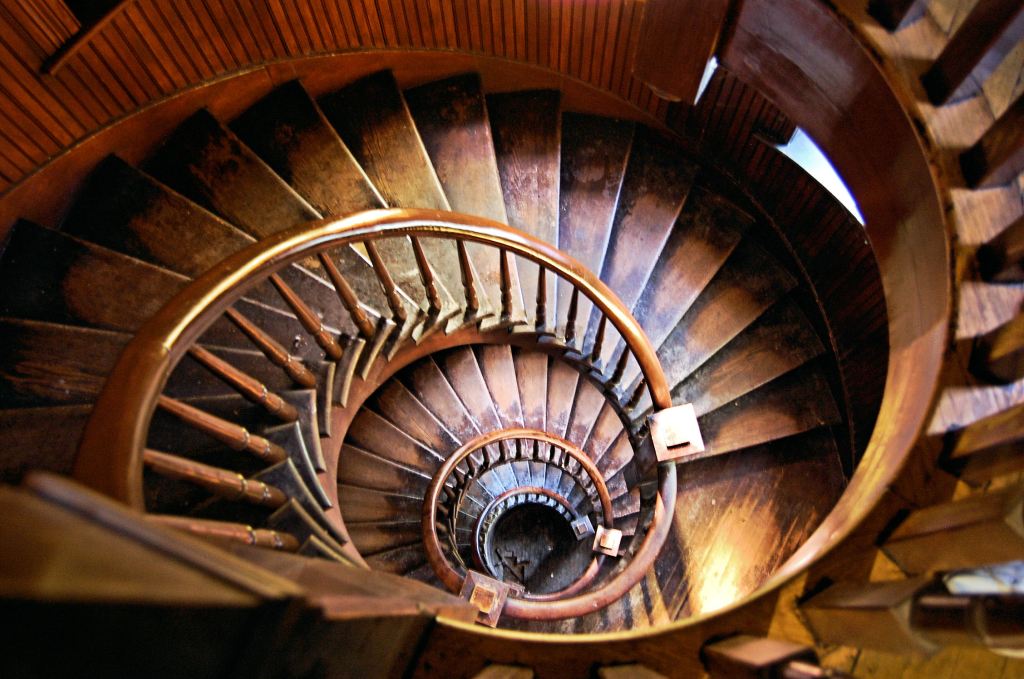
    Next was the Tower Stairway to the Observatory built in 1890.  We didn’t get to use the stairway as it is close due to not being to today’s code.  We used the modern elevator but were allowed to look down it and hear of hopes to renovate it.  It was astoundingly beautiful.  I can’t imagine climbing those stairs in those long dresses of the time.

    Dining hall today
    Dining hall today with the lady that once worked in the kitchens.

    From there we went out onto the astronomy observation deck.  Talk about a view of the lake!  WHEW!  It was lovely.  We could look at the aged copper dome over the Griffin Observatory but the actual telescopes were locked.  They are now used by the local Carthage College and were secured.

    From there we went back down to the floor where the chemistry lab was and looked over the study hall, library, and classrooms.  These were all located just above the dining hall. Each student had an assigned school desk in study hall where they kept their books for various classes.  Some classes were also held in the Durkee Mansion.  The classes often took place in several rooms.  The example we were shown were the foreign language rooms.  All girls were required to study Latin and another language.  There was a classroom sitting where they did their basic classroom studies of the language.  There was a conversation room, where the girls would adjourn in small groups with a teacher to converse only in the language being studied. The thought was moving about and changing venue for different aspects of the lesson helped the learning experience.

    Women in period dress at a table with various chemistry glass ware behind them in the other room you can see full size diagrams of human anatomy
    As always you can click any image to enlarge. This is the the class of 1886 who chose for their class portrait to be in chemistry class. This was before the spiffy new lab. Still the women were studying chemistry back then. Look into the background on the left and you will see diagrams of the human body posted full size in the other room.

    Finally we made our way back past the chemistry lab, observatory elevator and out to the Gilbert Simmons Gymnasium built in 1901.  NOW I know why people always go on about the Simmons Gym.  It’s not like my high school gym oh no!  It’s painted beautifully in the style of the Bayeux Tapestry!  There’s an ornate balcony where the Sisters observed the gym class.  The mural is stunning!  It was painted between 1910-1916 under the supervision of the art teacher Edit Bacon.  It was drawn by the students and painted by professional painters.  The center design has the motto of the school in Latin “fight the good fight”  The work on the mural was a gift from the 1915 and 1916 graduating classes.  The other dates on the shields were dates that restoration work was done.  The other tour members had been to weddings in here and say it’s lovely when fully decorated for a reception.

    From there we exited the school and enjoyed looking over the exterior given what we had just learned.  Then we gawked at Lake Michigan from the fishing pier.  The day was beautiful and many sailboats were making use of it.  Another tour group waved to us from the astronomy observation deck.  All in all it was an excellent tour and I was glad we went.

    (more…)