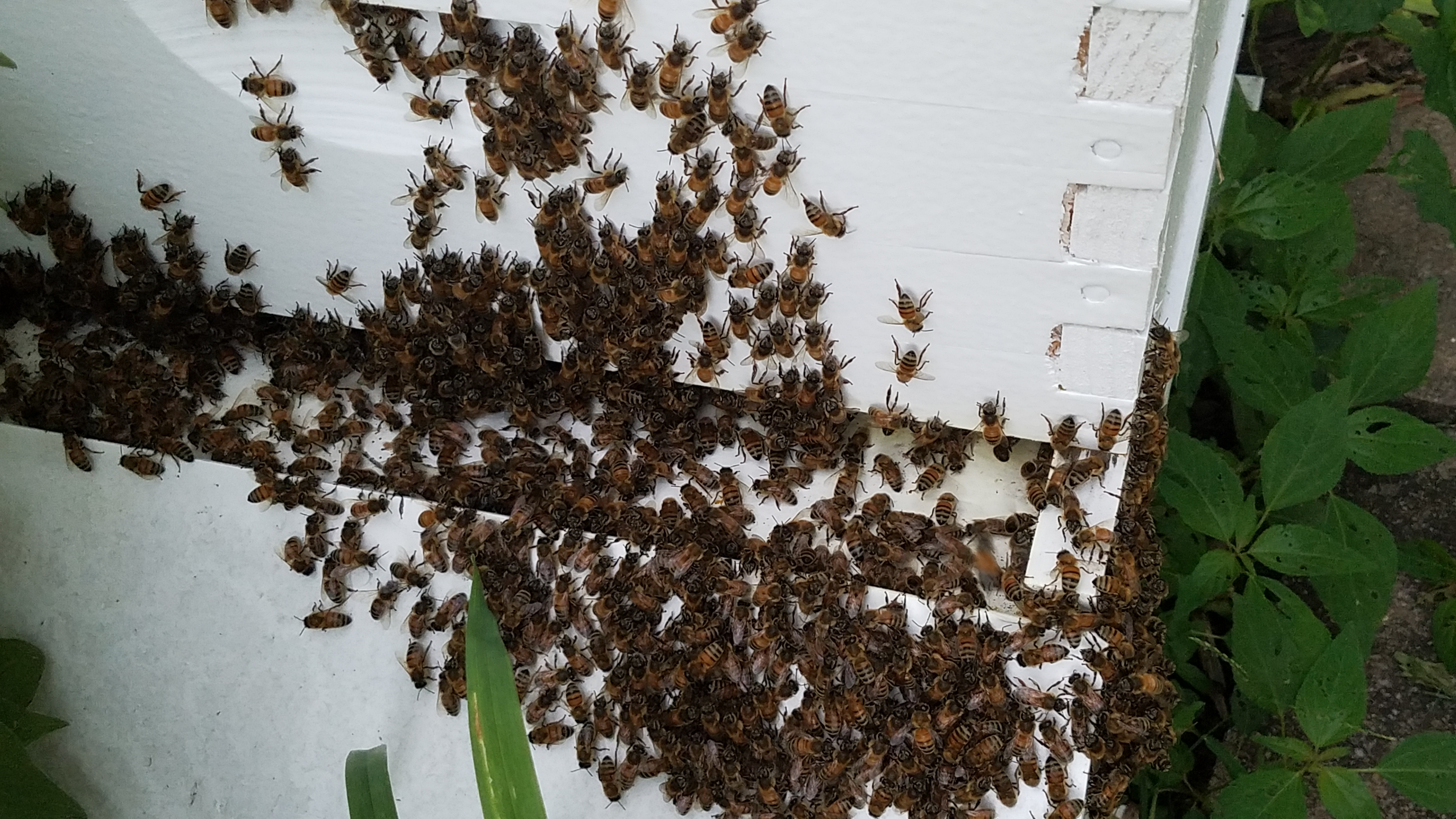
It all started when one of Mike’s Wisconsin coworkers would talk about his 10,000 pets. He had a bee hive for his farm. Since then Mike has wanted a hive. Moving here to Tennessee we finally got enough space to have one.
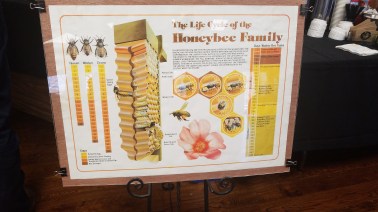 This February we went to a day long seminar put on by the Lawrence/Wayne County Beekeeper Association. There we learned the basics of bee keeping and joined the Association. We were on our way to becoming beekeepers. We were assigned a mentor. We got our equipment. Even won the equipment for a second hive from the Association who gives away hives to first time beekeeper members in a drawing. So now we were set for two hives.
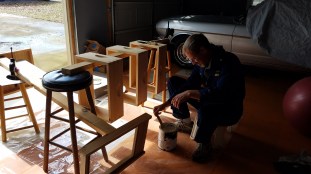
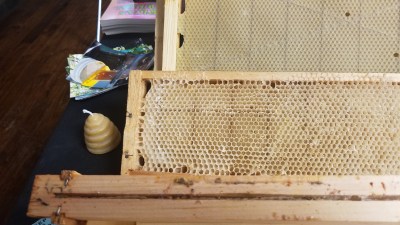
To prepare the equipment you have to paint the exterior of your hives and put base in your frames. Frames are like drawers in the hive and they have a wax form in them to give the bees a head start. The energy it takes them to make 8lbs of honey it takes them to make 1lb of wax. So giving them a head start, not harvesting comb, and returning their own comb back to them helps up your honey harvest. Once you have those things done you reinforce the frame structure with wire melting it into the wax form. You this so they don’t come apart in the extractor. (The extractor hold several frames of honeycomb that you have uncapped and spins them to extract the honey).
With all that done we found a bee hunter in Pulaski. A bee hunter is someone who captures swarms when they find them. Time went on and the season was starting. Club member that joined with us were getting hives and tending them. We wondered had we made a mistake going with a nuclear hive (a hive base with a few frames & queen) instead of mail-order bees where professionals dump some workers and assign them a queen.
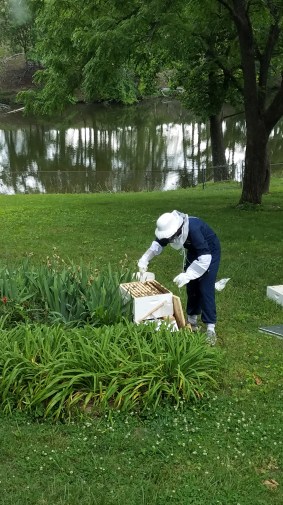
After the third month Mike spoke to our Association president who said he a nuc (short for nuclear hive) from a swarm he caught that we could have. We get one of our hives from the bee hunter and take the nuc. Now we had a have then in a week a swarm shows up at Mike’s work and the bee hunter calls that our hive is read. Mike with our Association’s president’s help again capture the swarm for another member waiting for her first hive. We pick up our second hive from the bee hunter. So now we are the proud caretakers of Hive 1 and Hive 2 or 20,000 new pets.
Sadly you do not get honey the first year. The bees need it for winter. They don’t make as much hive because they have to build the cone. (Remember the energy that takes!) So this year Mike wears the suit and tends them. You treat for mites, watch for wax moths, ants, and zombie disease. Yes that’s a real bee disease.
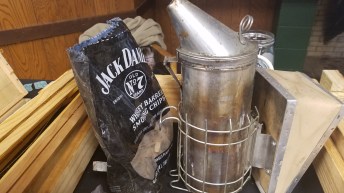
Mike has gotten stung. He forgot to smoke that which calms them if you don’t over do it. We learned bee stings are acidic so baking soda paste neutralizes them fast. (Wasp stings on the other hand are alkaline so it’s vinegar to neutralize them). Given my allergies and how violent they are getting I don’t suit up I watch from my office and support the club. I’ll also help with honey processing when the time comes. Generally the first harvest in the second year of keeping is about 15 lbs of honey. About this time next year if all goes well – hopefully we’ll have about 30lbs of honey on our hands.
Below is a video I made. Sorry for the Cloverfield shake at first but it quickly steadies out and you can watch Hive 2 going about daily business or bee-iness.


Leave a Reply