Tag: history

  • Historic Buildings By The Railroad

    Historic Buildings By The Railroad

    William Seymour house, Maple House, and Metra Tracks
    William Seymour house, Maple House, and Metra Tracks

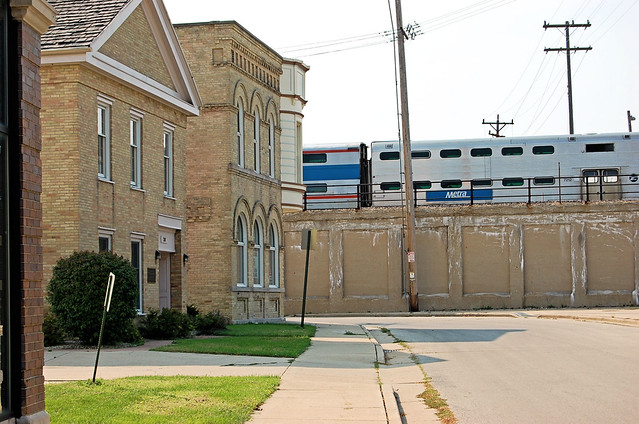
    Kenosha has several designated historic districts. This is the smallest one and it is called the Pearl Street Historic District. It consists of just four buildings on a short street between the police station and the Metra railroad. It was listed as a historic district in 1998 for the architectural quality. I have to say when I got out to look at the buildings the didn’t look too remarkable but after reading up on each building I see why they were preserved. All were threatened with demolition in the 1980s but when the unique structure of each of them was discovered they were rehabilitated in the 1990s by their owners and developers. Today three are office buildings two with spaces for rent, one is a church today.
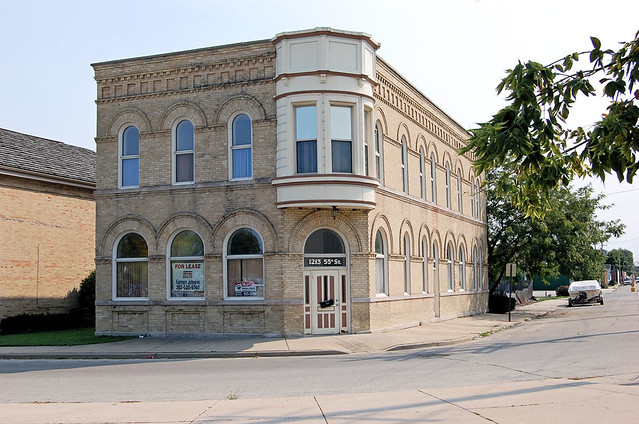
    Corner building with door facing corner and turret over door
    Maple House, 1213 55th Street

    The unique feature here is a corner turret covered in sheet metal with decorative cornice edges where it meets the flat roof. The round arches over the windows are a distinctive trait of the Cream City brick building. The building was constructed in 1880 and is a good representation of the Italianate style that was popular at the time. It was originally know as Maple House from 1896 to about 1925. At this time it was a popular saloon for railroad workers. In 1933 it because the Schlitz Hotel and Tavern. Later it was referred to as the Wisconsin Hotel. It sat vacant for 30 years but when the uniqueness of the structure was discovered it was renovated to the office building it is now. As you can see it has space for rent today. I joked it was the perfect place from my B&B (Books and Beads) store. No, no never running a store but sadly Kenosha lacks a bookstore of any kind even a chain one!

    William Seymour House at 1207 55th Street Kenosha WI
    William Seymour House at 1207 55th Street

    This home is in the Greek Revival style much like the Hull House in Waukegan started before it was remodeled to Victorian Gothic. This is a prime example of early architecture in this area. (seems so strange to consider 1850 EARLY I mean in Charleston we were talking about the 1680s as the early stuff, Tennessee it was the 1770s but here it’s the 1850s heck I name my direct line by memory that far back). The rumor was this was the home of the inventor of the typewriter but that’s wrong. It was built for William Seymour in 1850. It then became a boarding house and saloon. It was so successful that it expanded building the Maple House pictured above and the two were connected for a time. During prohibition, the buildings served as a restaurant, speak easy, hotel, and Communist Labor Party headquarters. About 1930 the house was disconnected from the Maple house and left to sit until renovations in the 1990s. Today it is a law office.
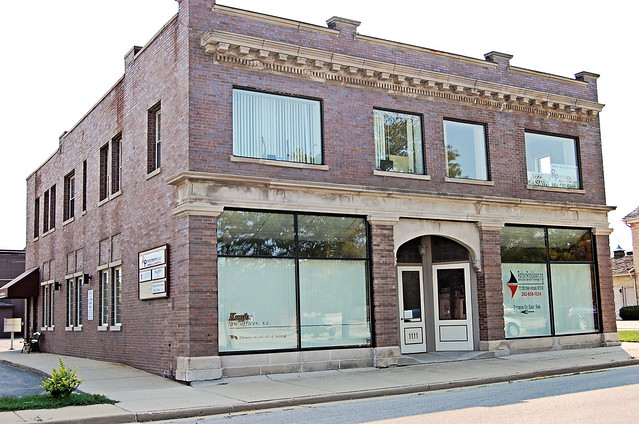
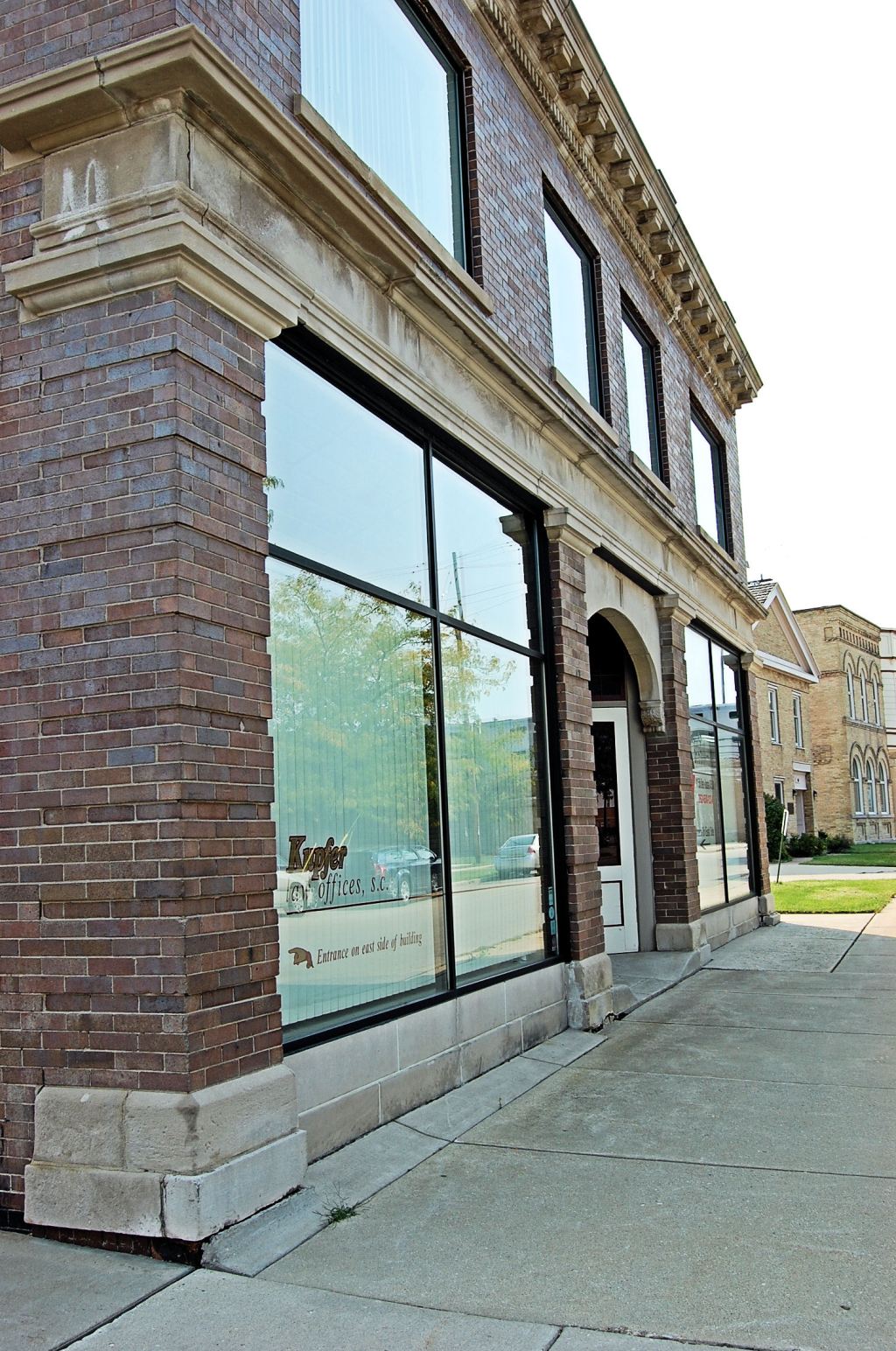
    Winberg Building 1109-1113 55th Street, Kenosha Wisconsin
    Winberg Building 1109-1113 55th Street, Kenosha Wisconsin

    This is the Winberg Building built in 1907 and house Kenosha’s first modern grocery It was known for it’s large storefront windows. It is in the classic revival style and made from red brick with Cream City brick accents, the recessed entrance offered shelter from the lake winds when entering. Windows for business in the area before were smaller with dividers like the next building. John Winberg built the building to house his grocery and another small business. It did so until the grocery closed in 1920. Then the grocery store part was partitioned off to smaller areas that were leased to short term tenants. It was remodeled in the 1990s and now houses offices of accounting firms, lawyers and such.

    Cast Iron Front Building 1100-1106 55th Street, Kenosha Wisconsin
    Cast Iron Front Building 1100-1106 55th Street

    This City Cream brick building is unique in that it’s three window bays are from the late 1800s and feature cast iron facades. These were popular for stores in that time period because it offered a way to have elaborate decorative detail without a lot of expense. Also these would be mass produce and shipped in one piece. It gave the possibility of having larger store front windows until the development of windows like those used in the Wineberg building about 30 years later. Unfortunately today the owner has allowed ivy to grow over the building making it hard to see the detail in the cast iron. Also at the time I took the picture a church service was going on inside. I didn’t want to seem to be a lurker so I made photos from across the street. I did walk past to see if there was a spot I could get a shot of these details but no. However as common as cast iron storefronts were in the late 1800s these the only three left here in Kenosha.

    Until next time!
  • An Advanced School for Girls

    An Advanced School for Girls

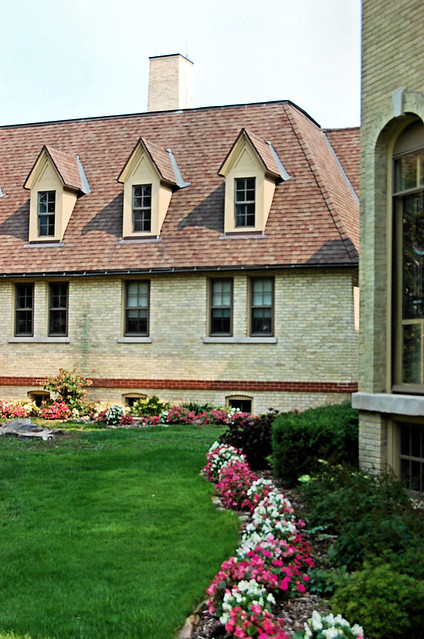
    Chalk brick building with begonia in white and pink trimming a manicured green lawn.

    Kemper Center is  an important landmark here in Kenosha.  It was added to the National Register of Historic Places in 1976  for historic significance in architecture (Italianate/Gothic), Education (girls school 1865-1975), and religion (Episcopal Sisters of St. Mary Western Provence).  It is named for Bishop Jackson Kemper, the First Missionary Bishop for the Northwest Territory of the American Episcopal Church.  It’s Register number #76000067.  The last time I did a post about it was highlight the Durkee Mansion during the holidays. Today highlights the school itself.

    It’s not often open for tours.  Mike and I were determined to see the center when we read in the paper it was to be completely open for tours on that Sunday.  From the nun’s lodging through the chapel to class areas including the first women’s chemistry lab and the Griffin observatory then out through the Simmons Gym. Sounded great and we were looking forward to seeing the interior.

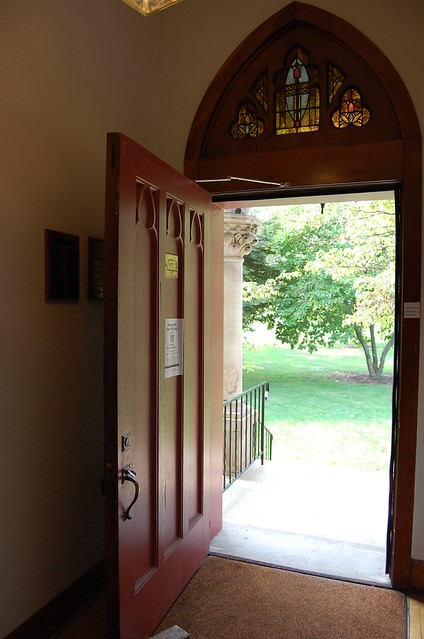
    A red door stands open to the well manicured lawn. Above the door is a stained glass window.

    The campus of the school grew of the years.  We started in Ambrose Hall which was home to 36 nuns and was built in 1911.  It even had a red door – yes I made a picture of it! It is named for Sister Mary Ambrose who was Mother Superior and headmistress at Kemper for nearly 40 years.  This hall featured the dining room for the nuns where they took their meals in silence but had a wonderful view of the lake.  Upstairs were the quarters for all the nuns except the Mother Superior who resided in the Durkee mansion.  There is a private chapel upstairs for the nuns.  This area was off limits to students and men it was the nuns area.

    There were many beautiful stain glass windows here as there were in the Durkee manison.  It was tradition that each graduating class design and donate a glass window to the school.  I’m going to give them their own post since the were so colorful on the sunny day of our tour.  Just know they are beautiful.

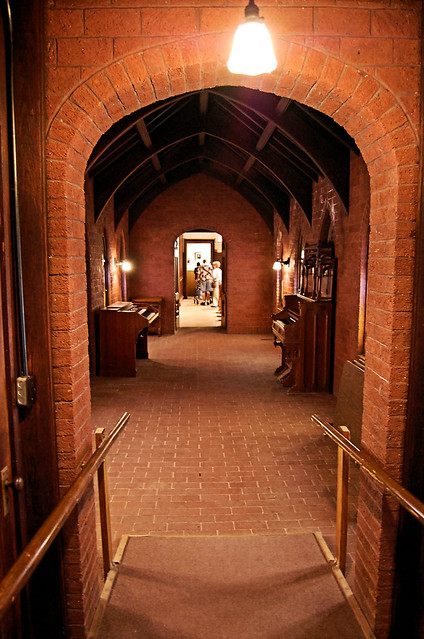
    Next the tour moved into the Red Brick Cloister built in 1911 connecting Ambrose Hall to the campus Chapel.  This was the final area of the sister’s retreat.  It is made of dark wood and red brick with Gothic arch ceiling.  Both sides are lined with beautiful stain glass windows each window offering a different stylization of the lily.  The Order of the Sisters symbol was the lily.  The area was very peaceful and calming.

    View from Ambrose Hall through the Red Cloister to the Campus Chapel

    From there we moved into the brightness of the campus Chapel built in 1875.  Like many structures it’s been expanded and elaborated upon since it was built.  In 1904 the marble Baptistery was added.  That features stain glass windows of the archangels.   The iron gates to the Baptistery and the Baptismal font were gifts from the Morrell family in gratitude of their daughter surviving the Chicago Iroquois Theater fire.  The rood screen separated the sitting area of the sisters from that of the students. It was designed by Anna Upjohn a student and was built in 1889.  The altar and pews were hand carved in the Germany.  The triptych over the altar features the main painting is a copy of The Mystical Marriage of St. Catherine by Fra Bartolommes.  The two side panels were painted by Anna Upjohn the same student that designed the rood screen.   There were numerous stained glass windows given as memorials, honorariums, and class graduations. 

    From there we entered the school proper. The intention of the school was to teach the girls to have spiritual, intellectual, and physical force to become leaders in society.  Roy Roger’s daughters attended here as did Basil Rathbone’s as did the future  Mrs. Alan Ladd.  Ms. Frances E. Willis the first woman ambassador was a member of the 1916 graduating class.  Today there are about 2,000 living alumnae living in all 50 states and 8 foreign countries.

    Alter with three paintings

    Through this connecting hall to the larger part of the school we passed the Bridal room.  A lovely room for brides to dress in their gowns and prepare for their wedding.  Also there were various displays about dorm rooms, class rooms, preparation of the chapel for services, and such.  Oh and yes still gorgeous stain glass windows continued throughout.

    Then we entered the dining hall.  We’d been here before for A Casino Night fund raiser for the care of the hall and observatory. There was a lady that had worked in the kitchen.  She told us stories about the girls, nuns, and priests.  Seemed many of the girls were children of families that traveled for work.  She remembered daughters of circus performers, diplomats, military families, and such.  She said she thought they started awfully young, at 5th grade.  Hard to be away from your family at that age.  School was year round not September – June as it is today.  They always sang a Latin prayer before meals and two sisters roamed the dining room watching for proper use of utensils and table manners.

    Dorm Room and Uniform display

    Next for us was the chemistry lab that was built in 1894.  It was modeled after a new one installed in Harvard at the time.  One of the Sisters came into an inheritance and felt this area of the school needed attention.  They did not shy away from teaching the girls science offering classes in astronomy, biology, botany, and chemistry.  This was the first chemistry lab in Wisconsin and the best lab outside of Harvard.  IN A SCHOOL EXCLUSIVELY FOR GIRLS!  I found that amazing!  I was very proud of the progressive stance these Nuns took in their education of the girls.

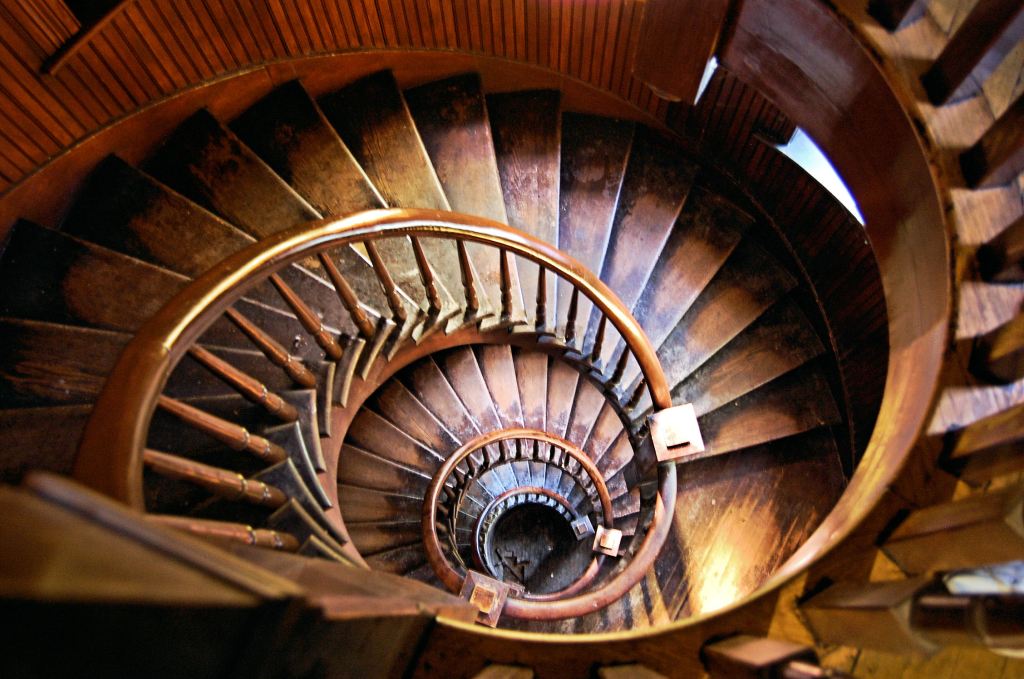
    Next was the Tower Stairway to the Observatory built in 1890.  We didn’t get to use the stairway as it is close due to not being to today’s code.  We used the modern elevator but were allowed to look down it and hear of hopes to renovate it.  It was astoundingly beautiful.  I can’t imagine climbing those stairs in those long dresses of the time.

    Dining hall today
    Dining hall today with the lady that once worked in the kitchens.

    From there we went out onto the astronomy observation deck.  Talk about a view of the lake!  WHEW!  It was lovely.  We could look at the aged copper dome over the Griffin Observatory but the actual telescopes were locked.  They are now used by the local Carthage College and were secured.

    From there we went back down to the floor where the chemistry lab was and looked over the study hall, library, and classrooms.  These were all located just above the dining hall. Each student had an assigned school desk in study hall where they kept their books for various classes.  Some classes were also held in the Durkee Mansion.  The classes often took place in several rooms.  The example we were shown were the foreign language rooms.  All girls were required to study Latin and another language.  There was a classroom sitting where they did their basic classroom studies of the language.  There was a conversation room, where the girls would adjourn in small groups with a teacher to converse only in the language being studied. The thought was moving about and changing venue for different aspects of the lesson helped the learning experience.

    Women in period dress at a table with various chemistry glass ware behind them in the other room you can see full size diagrams of human anatomy
    As always you can click any image to enlarge. This is the the class of 1886 who chose for their class portrait to be in chemistry class. This was before the spiffy new lab. Still the women were studying chemistry back then. Look into the background on the left and you will see diagrams of the human body posted full size in the other room.

    Finally we made our way back past the chemistry lab, observatory elevator and out to the Gilbert Simmons Gymnasium built in 1901.  NOW I know why people always go on about the Simmons Gym.  It’s not like my high school gym oh no!  It’s painted beautifully in the style of the Bayeux Tapestry!  There’s an ornate balcony where the Sisters observed the gym class.  The mural is stunning!  It was painted between 1910-1916 under the supervision of the art teacher Edit Bacon.  It was drawn by the students and painted by professional painters.  The center design has the motto of the school in Latin “fight the good fight”  The work on the mural was a gift from the 1915 and 1916 graduating classes.  The other dates on the shields were dates that restoration work was done.  The other tour members had been to weddings in here and say it’s lovely when fully decorated for a reception.

    From there we exited the school and enjoyed looking over the exterior given what we had just learned.  Then we gawked at Lake Michigan from the fishing pier.  The day was beautiful and many sailboats were making use of it.  Another tour group waved to us from the astronomy observation deck.  All in all it was an excellent tour and I was glad we went.

    (more…)

  • Restored Home in Waukegan

    Restored Home in Waukegan

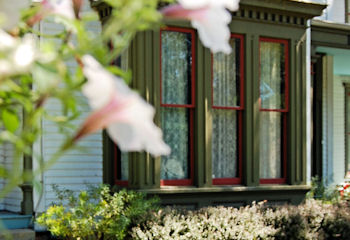
    Victorian home painted in a goldenrod, trimmed in olive green and red, porch ceilings painted sky blue

    Now we return to our Waukegan Trip.  The Haines Museum in Bowen Park opened and we got to tour it.  It’s operated by the Waukegan Historical Society.   This home was originally built as a one room cabin to go with the farm that is now Bowen Park.  Over the years with various owners it was added onto it until it because the Victorian home you see now.

    Mayor Hull of Chicago and his family lived there as their summer home until the great fire then lived there full time.  I learned that back then there were yearly elections for mayor.  CAN YOU IMAGINE YEARLY ELECTIONS? Always being bombarded by the campaign trail, all the calls from the various parties and interests groups.  The constant ads… it’d never end.  The mayor would never be a leader but a figure head and it’d open up for another machine that stayed in tact to actually run the city.  Oh wait… that’s what happened in the Chicago Political Machine.

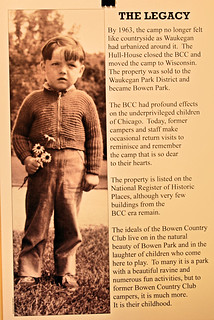
    Information poster shows a young boy from the 30s in a zippered sweater and dungarees holding a small bouquet of wildflowers

    Okay back to the house, it’s restored to its Victorian period to go with the architecture.  It was the center of the Bowen Country Club.  Here is where the children would be taught the ways of society.  It was thought part of the barrier of improving oneself was not understanding the societal  norms of table manners, dances, polite conversation, etc.  I think honestly some that still holds true today knowing how to behave in the boardroom as well as the local bar is key to advancement. Today there is a room dedicated to the club and those kids it helped in so many ways not just the social graces classes in the house.

    None of the items in the house are from the original owners.  They are from the correct time period and exemplify the types of things the home would have contained in this 1870s time period.  The last addition was the red parlor, a more formal parlor, and the master bedroom.  The master bedroom now contains a bed and settee set that Abraham Lincoln used during his visit to Waukegan.  The room is dedicated to him.

    Servants entrance with will worn torn screen door and dirty clapboard, still painted red

    There were exhibits to the Waukegan area residents Alfred Gustafson and James Elsbury who died on the Titantic.  There was an exhibit honoring Waukegan son Jack Benny, which explained why there was a Jack Benny art center (where the unhelpful lady was).  There was also a time line of Waukegan events including when their town got curb side recycling!  YAY!  From there I’ve added the Genesee Theater as a place I want to visit for a photo post.

    Also I noticed that all their doors were painted red.  I had to get photos of each one to add to my red door collection!  Heck some day I might make a poster of doors to sanctuary – all red doors I’ve photographed.  I have to say of all the doors my favorite one on the Haines Museum was the servant’s door with the aged screen.  Some doors to sanctuary aren’t ornate but are well used.

    Enough explaining – now for the photos.

    (more…)

  • Local Landmarks Vary

    Local Landmarks Vary

    A view from near where I grew up

    Every community has its landmarks. Some stick around for a long time, even beyond the thing that caused them to be landmarks. I grew up in Greene County, Tennessee with such landmarks in my neck of the woods as the twin barns (now gone), dead man’s curve (no longer has much traffic due to by-pass), red gate (never seen a red gate any where near there), the broom factory (it’s not been there for almost 100 years), tin top, and a few others. All of which I know exactly where they are but if you haven’t lived there a while and learned the jargon you’d be as confused as hell by the directions from Mosheim “go out 11E toward Greeneville stay on it through dead man’s curve keep follerin’ it past the broom factory and make yer right between the twin barns.”

    Every time I’ve moved into a new community I’ve had to learn the local landmarks and jargon. The South seems to have more and more colorful ones than any other area I’ve lived. They are the basis for directions from the locals. Something that was much more important back in the days before everyone had a GPS. I’ve been in new towns following sketched directions on a paper towel looking for the two clowns so I could turn left all before the days of GPS.

    South side view

    Kenosha has a few but with the system of streets and avenues being numbered you don’t need them so much. Streets here run East West or as I remember it they go Splash into the lake S for street ya see. The higher the number the further North from the Illinois boarder you are. Avenues on the other hand go North South Along the lake, A for Avenue ya see. The higher the number the further west away from the lake you are. Got it? Simple if an address is 7563 19th Avenue (don’t know who that is just made it up) That place is between 75th and 76th Street on 19th Avenue. Given this system Kenosha doesn’t do much landmark directions but there are a few things that people reference.

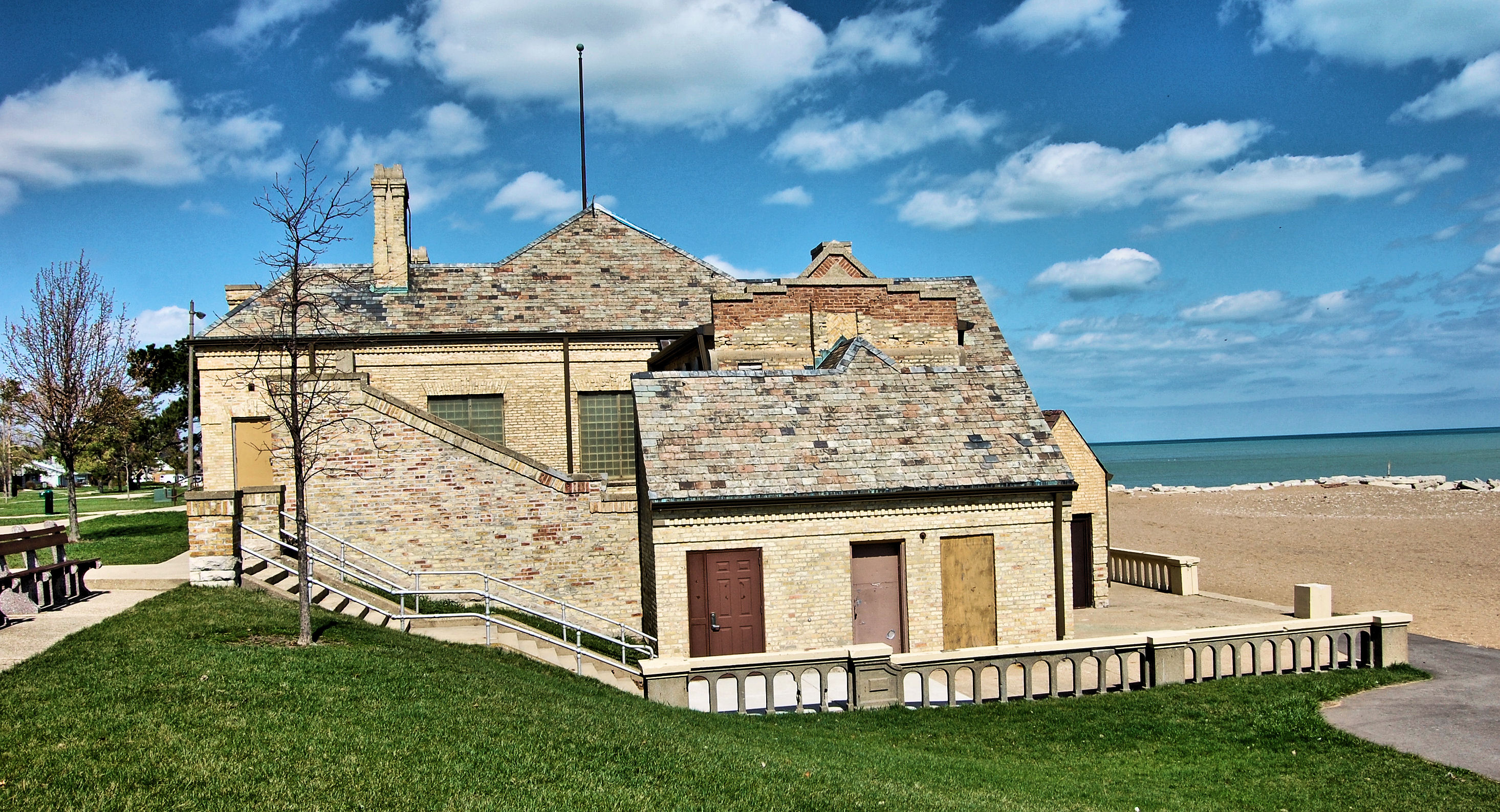
    I’ve shared some with you already – Kemper Center, Simmons Island, Southport Beach House. Today I’m going to share three more with you.

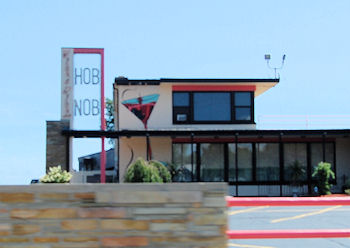
    The famous or infamous Cosmo painted on the side

    The first is the Hob Knob. It was established in 1954 in the supper club style of the 50s. It’s kitchy by today’s standards but fun. Sitting right on the shore of Lake Michigan the views are unsurpassed. I’ve only eaten there once years ago. I don’t remember much about the food but I do remember the decoration made me expect to see Frank Sanatra lead in the Brat Pack telling them this was hip little dinner club just North of Chicago he was talking about.

    I snapped this picture as we drove by in the Mustang.  Yes the top was down and I was enjoying myself.  I always like the big Cosmo painted on the side of the building.  It just lets you know what you are in for when you go inside.  Dining there again but this time calling to be sure we get seats that face the lake is on our Kenosha bucket list.  Last time we had seats that faced the street but we walked in and took what’s available.  I really need to go by there at night when the neon is all lit up and snap some more shots.

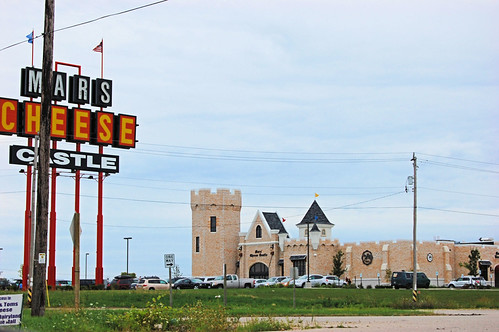
    The classic sign and the new building

    Next up is a place on my Kenosha Bucketlist.  It’s been on the Food Channel as a great road trip stop.  Yes I’m speaking of none other than Kenosha’s cheese royalty the Mars Cheese Castle!  It’s been recently rebuilt to look more castle like.  However they kept their iconic sign.  Being next to the interstate where they get most of their business I’m told, it’s good to keep the logo.

    I’ve lamented that I have been delinquent in going into the Cheese Castle.  I mean I’ve been in and to the Brat Stop many times.  (subject of another post but let me say it’s not a place you stop for misbehaving kids but a bratwurst place). I’ve taken the exit from I-94 where it sits to head home as I did on the evening I snapped this photo.  But I’ve never gone into the place.  The locals tell me not to worry, it’s a tourist trap being the first big cheese place just north of Chicago.  It’s more known in the community for the iconic sign.  Well that I’ve seen so maybe that’s good enough.

    It seems that landmarks in Kenosha are food related.  There are more I’ll cover in the future there’s the afore mentioned Brat Stop, Sunnyside Wine Shop and Bar, Frank’s Diner, Capt Mike’s (gourmet mac’n’cheese), D’Angleos and several more.  Let me know what are your local landmarks and how are they used?  What were the landmarks of your childhood?  I’m thinking now when I go back to visit I’ll have to get photos of tin top, broom factory, and others too.

    Until next time!
  • A Walk In Time Down Gay Street

    A Walk In Time Down Gay Street

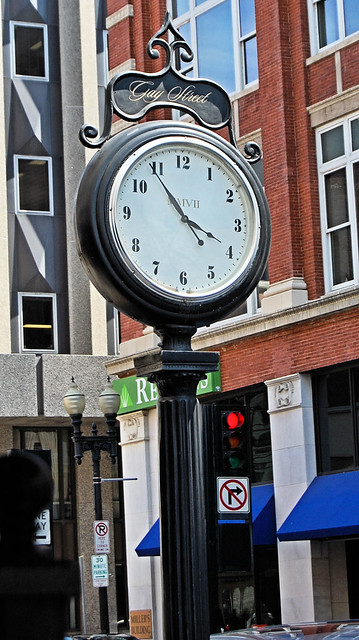
    Gay Street, Knoxville, Tennessee

    I grew up with Knoxville, Tennessee being one of the big towns.  If we wanted something and we couldn’t get it in town (Greeneville, Tennessee)  one of the big towns to go for it would be Knoxville.  We went there to do back to school shopping.  We went there for Spring clothes shopping.  We went there for concerts.  We went there for just released movies. It was the big town with more to offer.

    In my day the place we went was West Towne Mall.  Near that was a the hip cool place to get record albums (yep talkin’ vinyl here) the day they were released, Cats Records.  Couldn’t get albums until a week maybe two after release in Greeneville.  Just like movies you had wait for them to be out a bit to make it down the pipeline to Greeneville.

    Gay Street, Knoxville, Tennessee

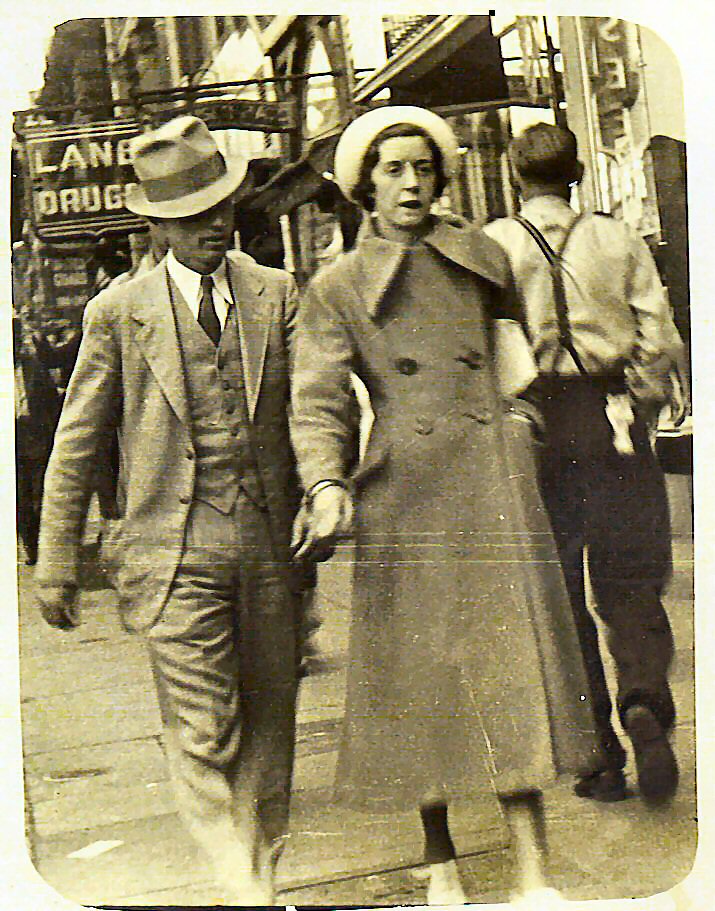
    Back in my grandmother’s day the hub of action in Knoxville was downtown.  Gay Street was where it happened. That’s where her daddy took her shopping and where she went shopping with my Papaw in tow.

    I have a photo of them made by a street photographer on Gay Street. We think it was the mid to late 1930s when this was taken. In those days a street photographer made your picture then tried to sell it to you.  Kinda like what we see at amusement parks today but then it was in busy places, like Gay Street.

    (more…)

  • Library Park in Kenosha From Books to Homes.

    Library Park in Kenosha From Books to Homes.

    Library Park, Kenosha, Wisconsin
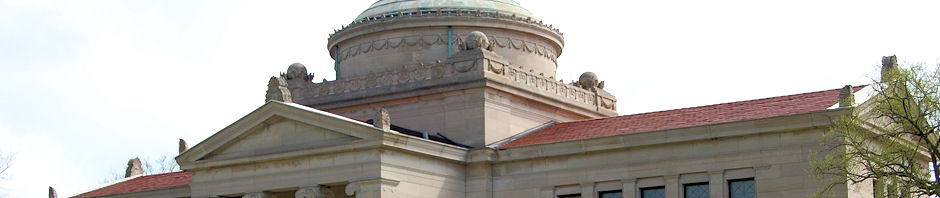
    Gilbert m Simmons Memorial Library #74000093 on the National Register of Historic Places. It designed by Daniel H. Burnham and built as a donation to the city by Z G Simmons. It was dedicated May 30, 1900 to the memory of his son Gilbert M. Simmons.

    Back in the early Spring Rappy (my greyhound) and I went to Library Park to make pictures. You see Library Park is one of the locations on the National Register of Historic Places in Kenosha. The library the Gilbert M. Simmons Memorial Library was added back in 1974. The Library Park Historic District including the library, historic homes, and St. Matthew’s Episcopal Church was added to the register in 1988. Library Park itself was added in 2000.

    You can read about each home in more detail on this flyer by Kenosha Area Convention and Visitors Bureau. I’ll give just a small blurb in the comments on each photo. You can take a virtual tour of the interior of the library here at Kenosha Public Library website. Oh and hear a librarian tell of her encounters with ghosts in Simmons Library here on YouTube.

    Now that I have information from the Kenosha History Center I see I missed some important homes and building in that historic district.  I’ll go back some time soon and make it another post.  Enjoy an sunny but cold early Spring day in the park.

    (more…)

  • Kenosha History Center

    Kenosha History Center

    Kenosha History Center, Simmons Island, Kenosha Wisconsin

    Saturday when I had the pleasure of the Pike River Rendezvous and the tour of the Kenosha Light Station I went around the corner to the Kenosha History Center. It’s a wonderful small museum dedicated to the history of the Kenosha, earlier called Southport, community.

    The Center has a collection of things related to life in Kenosha. There’s everything from cars once made here to toys played with by children growing up here. I too had a Mrs. Beasley doll like the one one display. I enjoyed my stroll through the museum as one of a few people that had found this gem.

    Kenosha History Center, Simmons Island, Kenosha Wisconsin

    I was surprised more people weren’t stopping by the Center. First off, it’s free – they ask for a small donations if you are able but if not that’s fine. It was air conditions and on a hot day it was nice to come in and cool off. It had indoor plumbing bathrooms which beat the port-a-pottys at the Rendezvous all to pieces. (I will only use a portlet in case of emergency.) It was just a block from the Rendezvous and half a block from the Light Station. But the final reason was it was very interesting to see how the community developed from the time period of the Rendezvous to today.

    I made pictures as I do when I go places. I do apologize for the warm coloring of some but it’s the type of lighting used in the museum to preserve the artifacts combined with the no flash photography rule. I’m always appreciative of museums that allow photos and understand why flash photography is out. Don’t want to fade the color of the objects. Textiles are especially vulnerable to that. That also accounts for the grain in the photos due to the higher the ISO. (The more light sensitive the higher the ISO. The higher the ISO, the more noise to picture ratio on single pixels. Eh, what I refer to as grain which is a throw back to silver grains in the higher ASA films back in the day when I did my own darkroom work.)

    Sit back and enjoy a tour of a few things that caught my eye.

    (more…)

  • Restoring the Keeper of the Light

    Restoring the Keeper of the Light

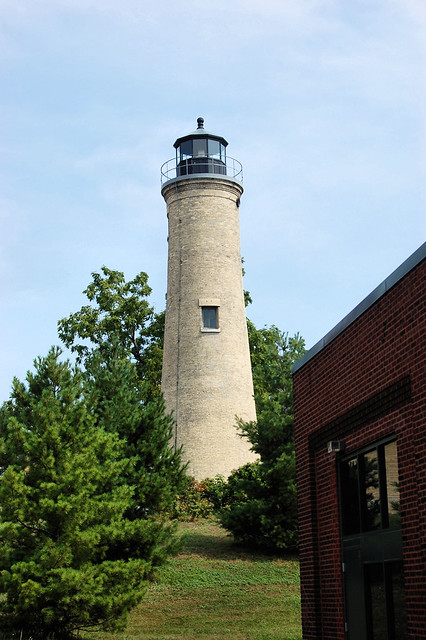
    Kenosha Light Station, Simmons Island, Kenosha Wisconsin
    Kenosha Light Station, National Register of Historic Places #90000995

    Saturday when I attended the Pike River Rendezvous the Kenosha History Center was having a fund raiser for the restoration of the Simmons Island lighthouse. I made a donation and toured the  keeper’s house as well as a bit of the lighthouse. The house is completely restored downstairs. Upstairs is in process with one room is complete.

    I didn’t go all the way up in the lighthouse. The deck up there was closed so there’s not much to see at the top. It was extremely hot so I just went up part way and enjoyed the wonderful wrought iron stairs in there. Why don’t we make every day things beautiful any more? Like stairs and warehouses?

    The lighthouse and the keeper’s house were built by the federal government in 1866. It is 74 feet above lake level. The light only operated for 40 years but light keepers lived in the house until the 1940s. There are other harbor lights they tended and posted weather warning flags on this lighthouse. It is being currently being renovated. It’s funded by donations and grants. It was placed on the National Register of Historic places in 1990.

    Kenosha Light Station, Simmons Island, Kenosha Wisconsin

    Enjoy the tour after the jump. Until next time!

    (more…)

  • Pike River Rendezvous

    Pike River Rendezvous

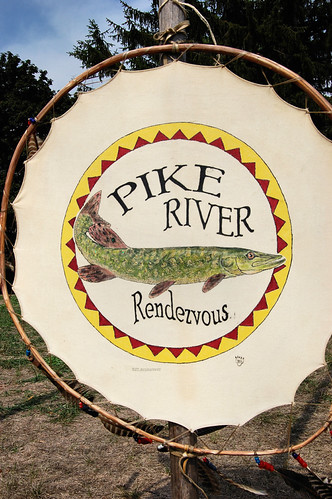
    Pike River Rendezvous on Simmons Island in Kenosha, Wisconsin

    Yesterday I went to Simmons Island here in Kenosha.  I went to the Pike River Rendezvous.  It is a historic reenactment of life in the late 1700s and early 1800s in this area.  It is open and free to the public.  The reenactors like to share their stories, history, goods, and services.  There was a battle with pirates on the shores of Lake Michigan.

    I’d like to thank all the participants that were nice enough to allow me to photograph them and their things.  So many were gracious to allow it and look forward to seeing themselves there.  If you stop by please say hi.  I’m sorry but I lost my notes on who is who.  I would so like to give you credit for being such a gracious host/hostess.

    Pike River Rendezvous on Simmons Island in Kenosha, Wisconsin

    Oh one nice thing for me is I got to drive the Mustang.  Mike had taken the car to the airport to go on his long weekend of active duty.  Aaron had taken the truck to go to work so I got to take the lady out for a drive.  I didn’t put the top down because there was a prediction of storms rolling in about 11am or so. Don’t worry honey I was careful and even parallel parked her just fine.

    Pike River Rendezvous on Simmons Island in Kenosha, Wisconsin

    (more…)

  • A Historic Spring Drive In Kenosha

    A Historic Spring Drive In Kenosha

    Back in early Spring Mike was itching to get out in his new toy. But being a man he can’t just to out tooling around to see where the road goes, he needs a goal, a destination.

    Kenosha, WisconsinWhich is where I come in. I’d been wanting to get out and get some photos of historic homes in Kenosha that are on the National Register of Historic Places. So I provided a list of destinations, Mike put the top down and got behind the wheel. I hopped in the passenger side with my trusty Nikon DSLR and we were off. So enjoy a quick historic photo tour of a few of the places in Kenosha on the National Register.

    (more…)